

How to get to Venice by plane: airports, connections and practical tips
- 6 min read
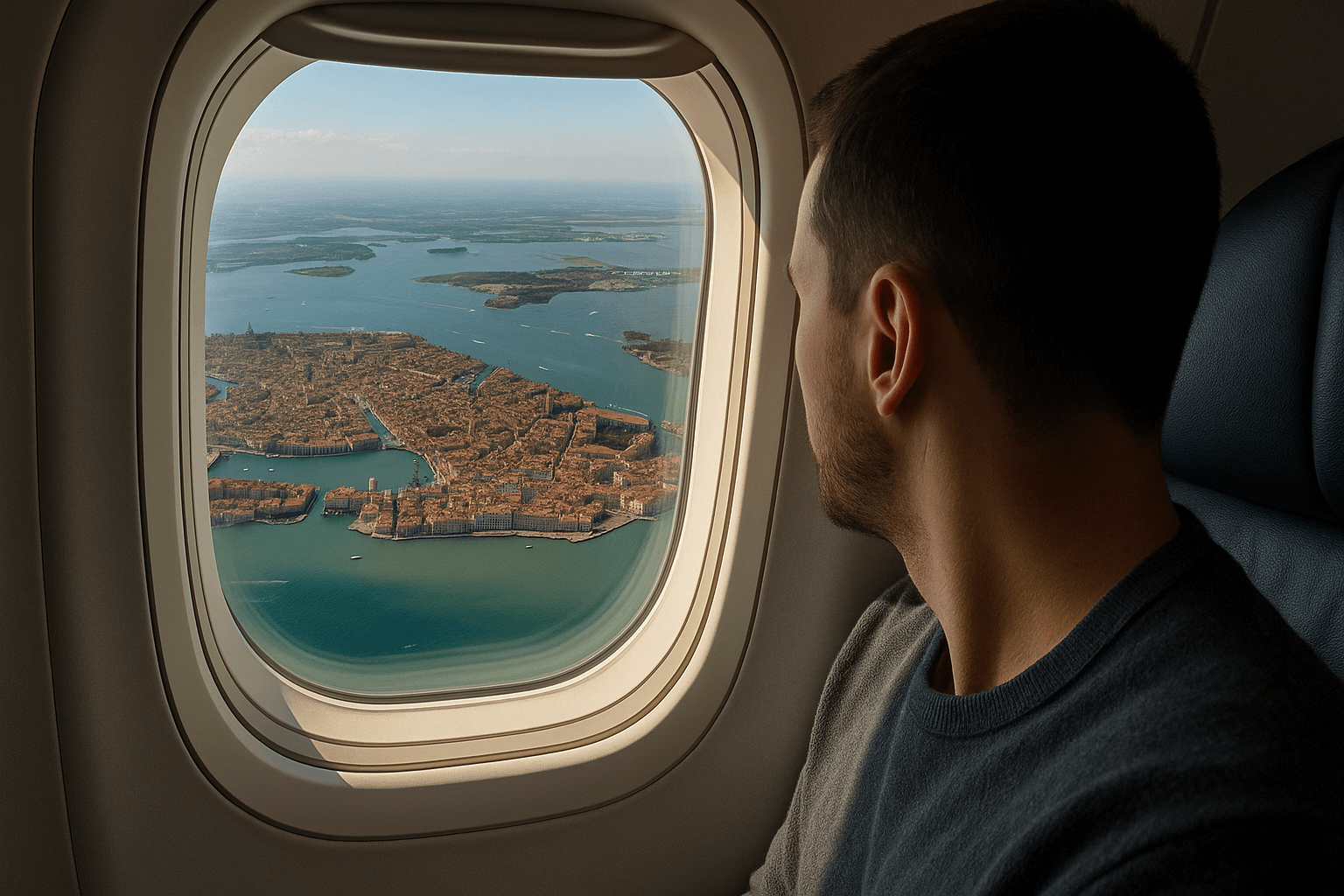
Arriving in Venice by plane means watching the lagoon slowly open up beneath the aircraft, as the water becomes the first sign of the experience awaiting the traveller. Landing at the two main airports, Marco Polo and Treviso, immediately introduces the city’s unique logistics, but it is in the transfer to the center that one truly perceives the change of pace. Due to the absence of cars, every movement becomes an evocative transition via vaporetti (water buses), water taxis, and pedestrian paths. The journey, therefore, does not begin upon arrival in the city, but from the moment you step outside the airport. In short, flying to Venice combines practicality, emotion, and a unique entrance into the city on water.

Venice Airport to Venice city Transfer
Airports and the First Arrival Experience
Arriving in Venice by plane is an evocative moment because the lagoon appears shortly before landing, anticipating the city’s unique nature. Those who choose flying as their means of entry find two main airports: Marco Polo, located just a few minutes from the island, and Canova di Treviso, which is further away but often used by those flying with low-cost airlines. The choice of airport depends on budget and time available, also due to the different connection methods to the center. In summary, both allow for a comfortable journey to Venice, although the arrival experience changes significantly between the two airports.
Differences Between Marco Polo and Treviso
Understanding which airport to choose is important because it affects transfer times. Marco Polo is the closest airport, well-connected, and equipped with modern services; Treviso, however, requires a longer journey but often allows for savings on the cost of the flight. Due to its distance from the lagoon, the transfer from Treviso takes at least 50 minutes, while from Marco Polo, the island can be reached in 20–30 minutes with public transport or water taxis. Furthermore, Marco Polo offers direct access to water transport services, making the arrival particularly picturesque. In summary, those who want to optimize time and comfort tend to choose Marco Polo, while those looking for an economic solution opt for Treviso.
How to Reach the Historic Centre from the Airport
Once you have landed in Venice by plane, the transfer to the centre can be made by bus, shuttles, water taxis, or the Alilaguna service. Buses quickly connect both airports to Piazzale Roma, but those who desire a scenic entrance prefer Alilaguna, which allows for direct arrival by water to Rialto, San Marco, or the Lido. Due to the greater number of stops, the journey may be slower, but it offers an enchanting first glimpse of the city. For those seeking speed or carrying a lot of luggage, the water taxi remains the most comfortable option, although it is more expensive. In summary, each means guarantees a different experience and allows the traveller to begin their stay according to their needs.
Getting Around Venice After Arrival
Once the center is reached, the way of moving changes completely because Venice is a pedestrian city. The vaporetto (water bus) is the most practical solution for long distances, but it can be crowded during rush hours due to the high number of tourists. Walking remains the most authentic alternative for experiencing the city up close, even if navigating between calli (alleys) and bridges may seem complicated. In reality, signage facilitates movement and helps reach destinations like Rialto or San Marco without difficulty. For faster transfers or to reach isolated areas like the Giudecca, the water taxi remains the most efficient solution. In summary, Venice invites you to move slowly, integrating every movement into the travel experience itself.
Venice Airport to Venice city Transfer
Costs, Times and Useful Advice
Organising a trip to Venice by plane requires some foresight, as transfer times can vary greatly between one airport and the other. Bus tickets are inexpensive, but the more scenic water options have higher costs. Tourist passes for the vaporetto are often convenient due to unlimited rides, especially for those who plan to move frequently. The choice of accommodation significantly influences the experience: arriving with heavy luggage in areas with many bridges can be challenging, but planning the route well avoids inconvenience. In summary, knowing fares, means of transport, and distances allows you to experience the city with greater peace of mind.
What to Expect on Your First Arrival in Venice by Plane
Arriving for the first time in Venice by plane means encountering a completely different way of entering the city, because here there are no cars, traditional roads, or city buses crossing the historic center. As soon as you exit the airport, the visitor immediately perceives that the lagoon defines every movement, but this characteristic is not a limitation; on the contrary, it immediately introduces the city’s charm. Due to the urban layout, all transfers take place via water or end at Piazzale Roma, the last point accessible to wheeled vehicles. Tourists quickly notice how distances change perception, because moving on foot becomes natural and vaporetti represent the equivalent of a city bus.
The arrival via the Alilaguna vaporetto is often the most emotional moment, as you glide slowly along the canals while the city gradually reveals its profile. Those who opt for the water taxi, however, experience a faster and more direct entrance, but equally scenic, especially at sunset when the light reflects on the water. In summary, landing and reaching Venice is already part of the experience: the journey does not begin when you enter the city, but at the exact moment you set foot outside the airport.
Venice Airport to Venice city Transfer
FAQ – How to Get to Venice by Plane
1. Which airport should I use to go to Venice? The recommended airport is Marco Polo (VCE), as it is the closest to the historic centre and has direct connections by water and land.
2. What is the best way to get to Venice? The most comfortable way is to use the Alilaguna vaporetto or a water taxi from Marco Polo, but buses to Piazzale Roma remain the most economical option.
3. How can I get to Venice from the airport? You can reach Venice by bus, Alilaguna vaporetto, or water taxi; the choice depends on your budget and accommodation area.
4. Where do planes land in Venice? Planes land at Venice Marco Polo (VCE) or Treviso Canova (TSF) airports, although Marco Polo is the main one.
5. What is the cheapest time to go to Venice? The winter months (excluding holidays) are the most convenient, as flights and hotels have lower rates.
6. How far is Venice Airport from the centre? Marco Polo is about 20–30 minutes from the centre depending on the means chosen; Treviso requires at least 50 minutes.
7. How do I get from Marco Polo Airport to St. Mark’s Square (Piazza San Marco)? The most direct solution is the Alilaguna Blue line, but a water taxi allows for a quicker and more comfortable arrival.