

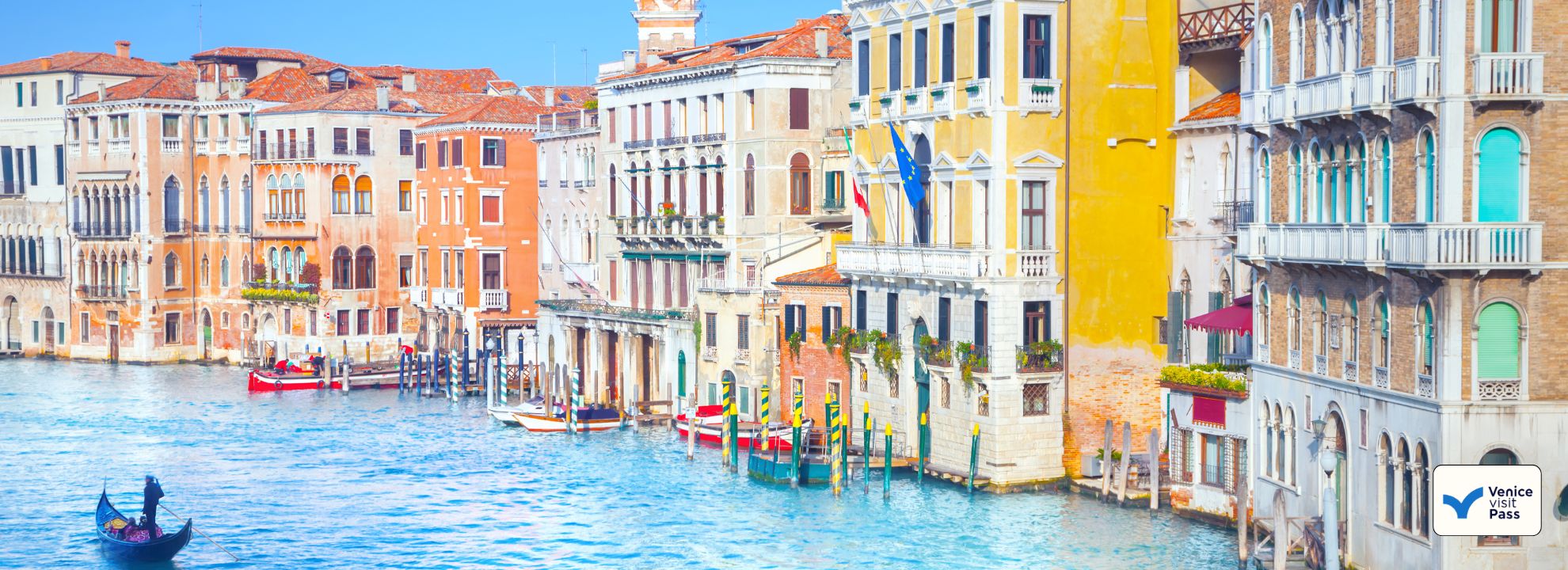
How to get around Venice during your first visit
Walking is the most practical, economical, and fastest way to discover Venice: its narrow streets (calli) and characteristic bridges are meant to be experienced on foot, one step at a time. For longer journeys or to reach the lagoon islands, the vaporetto (water bus) is the most convenient public transport, while water taxis remain a more exclusive and expensive option.
In autumn and winter, acqua alta (high tide) can occur: always check the tide schedules before heading out and bring waterproof boots with you. In summer, on the other hand, the heat can be intense: keep a water bottle handy to refill at the many public fountains scattered around the city.
Venice: ACTV Daily Vaporetto Pass
When to visit Venice: the best season
Every season in Venice tells a different story about the city, and there is no wrong time to go: it just depends on what you are looking for.
- Spring: Mild weather and clear skies, ideal for enjoying the city and events like the Venice Biennale.
- Summer: Venice comes alive with tourists, crowded terraces, and warm days. It is a great time for boat trips and reaching the beaches of Lido, but expect larger crowds.
- Autumn: Pleasant temperatures and fewer tourists, perfect for visiting monuments at a leisurely pace. The Regata Storica (Historical Regatta) brings a festive and traditional atmosphere.
- Winter: Less crowded and full of indoor events like the Carnival, offering a more intimate and cultural experience.
Must-see attractions for your first time in Venice
St. Mark’s Basilica
An absolute masterpiece of Byzantine and Gothic architecture, St. Mark’s Basilica is the spiritual and symbolic heart of Venice. Its façade, with its five domes and over $8,000\text{ square meters}$ of golden mosaics, tells centuries of history through sacred images and influences from Constantinople. Inside, the polychrome marble floors, the Pala d’Oro, and the treasury kept within the basilica make the visit a total immersion into ancient and lavish Venice. It is worth arriving early in the morning when the light pours in through the high windows and the square is still quiet.
Find out more: St. Mark’s Basilica
Guided Tour of St. Mark’s Basilica and San Marco History Gallery
Starting from 42,00 €Book
Doge’s Palace
The historic residence of the doges and the seat of political power of the Venetian Republic for centuries, the Doge’s Palace is an extraordinary example of Venetian Gothic architecture, featuring an openwork façade overlooking the St. Mark’s Basin. Inside, you will find rooms frescoed by Tintoretto and Veronese, the spectacular Chamber of the Great Council, and the austere prison quarters. The prisons are connected to the palace by the famous Bridge of Sighs—where, according to legend, convicts took a final glimpse at freedom before entering their cells. A visit here blends art, power, and stories of political intrigue.
Find out more: Doge’s Palace
Doge's Palace Reserved Entry Ticket
Starting from 42,90 €53,00 €Book
Rialto Bridge
The oldest and most famous bridge over the Grand Canal, dating back to the 16th century: an unmissable crossing point and viewpoint. Built based on a design by Antonio da Ponte, it is much more than just a crossing: its historic shops, once reserved for goldsmiths and merchants, now house stores and boutiques. From the top of the arch, you can enjoy one of the most photographed views of the city. Crossing it at sunset, when the golden light reflects on the water and gondolas glide beneath its arches, is an experience that every first-time visitor to Venice should experience at least once.
Grand Canal and Gondola Ride
Nearly four kilometers long, the Grand Canal is the city’s main water artery and a true open-air museum. More than 170 historic palaces line its banks, bearing witness to the commercial and artistic wealth of the Serenissima. Exploring it by gondola (shared or private), lulled by the slow rhythm of the oar, allows you to discover hidden corners and secondary canals inaccessible on foot. Meanwhile, the Line 1 vaporetto offers a cheaper alternative to admire the entire route from St. Mark’s to the Santa Lucia railway station.

Private Gondola Ride in Venice (Max 5 Guests)
Peggy Guggenheim Collection
Housed in the unfinished Palazzo Venier dei Leoni overlooking the Grand Canal, the Peggy Guggenheim Collection is one of Europe’s most important museums of modern and contemporary art. The rooms showcase works by Picasso, Dalí, Kandinsky, Pollock, and Magritte, alongside a sculpture garden that directly overlooks the water. For anyone who loves 20th-century art, it offers a completely different perspective on the city compared to the great Byzantine and Renaissance masterpieces.
St. Mark’s Campanile (Bell Tower)
Standing nearly $99\text{ meters}$ tall, St. Mark’s Campanile dominates the square and the lagoon. Its summit offers a 360-degree view stretching from the red roofs of the historic center to the islands of Murano, Burano, and San Giorgio Maggiore, with the Alps visible on the clearest days. Going up during the first few days of your trip also helps you get your bearings and easily spot the neighborhoods and monuments you will explore next.

Tickets for the Bell Tower and the historic gallery of St. Mark's Square
The top 3 neighborhoods to explore
San Marco
The beating heart and historic showcase of the city, the San Marco district (sestiere) houses most of Venice’s iconic monuments: the Basilica, the Doge’s Palace, the Campanile, and the elegant Procuratie that enclose the square on three sides. It is the most tourist-heavy and crowded area, featuring luxury boutiques, historic cafés like Caffè Florian, and a constant bustle along the main streets. Despite the crowds, it remains the most convenient choice for first-time visitors: staying here means having major attractions just a short walk away, making it easy to navigate the rest of the city on foot, though usually at a higher cost compared to other neighborhoods.
Cannaregio
The Cannaregio district represents the most authentic and everyday side of Venice, lived in by locals far from the main tourist flows. Here, you will find the Jewish Ghetto—the oldest in the world—with its synagogues and tower-houses overlooking quiet little squares (campi). Strolling along its canals, such as the picturesque Fondamenta della Misericordia, you will discover traditional taverns and bàcari where you can stop for an ombra (a small glass of wine) and cicchetti (Venetian tapas), enjoying a much more relaxed pace of life than in San Marco. It is also a strategic area for those arriving by train, as it sits close to the Santa Lucia station, and often offers more affordable accommodation options.
Dorsoduro
The artistic and cultural neighborhood par excellence, Dorsoduro houses some of the city’s most important art collections, from the Peggy Guggenheim Collection to the Gallerie dell’Accademia, as well as the scenic Basilica of Santa Maria della Salute dominating the entrance to the Grand Canal. It is the preferred area for students, artists, and art enthusiasts, boasting a lively yet less chaotic atmosphere than the more heavily tourist-traversed center. Its sunny promenades, like the Zattere, offer one of the most beautiful walks in Venice, with views of the Giudecca and the water expanding out into the lagoon—an excellent base for those seeking a balance between culture, tranquility, and proximity to the heart of the city.
How to get to Venice
- Marco Polo Airport: Connected to Piazzale Roma by ATVO buses in about 20 minutes, from where water buses (vaporetti) and water taxis depart for the historic center.
- Santa Lucia Railway Station: Located right on the Grand Canal, it is the ideal arrival point for those traveling by train, with the center accessible on foot or via public transport.
Experiences to have at least once
Beyond the major attractions, Venice offers artisan workshops and experiences that tell the story of its most authentic soul, perfect for enriching your first trip.
Find out more: Experiences
Practical Advice
Venice is a compact, pedestrian-only city: walking remains the best way to explore it. The public transport system with water buses and water taxis is efficient and easy to use by purchasing tickets via the app or at automated ticket machines.
Please note that swimming in the canals and feeding pigeons is forbidden and subject to heavy fines. Avoid sitting on bridges or steps in crowded areas so as not to block the passage.
FAQ – First Time in Venice
-
How many days do you need for a first time in Venice?
Three or four days are ideal for taking your time to see the main monuments, historic neighborhoods, and perhaps one of the lagoon islands like Murano or Burano. -
What is the best time for a first visit?
Spring and autumn offer the most pleasant weather and a good balance between crowd sizes and the availability of events in the city. -
Is it worth booking tickets in advance?
Yes: queues for St. Mark’s Basilica and the Doge’s Palace can be very long, especially in spring and autumn. Booking a skip-the-line ticket online can save you hours. -
Do you tip gondoliers?
It is not mandatory, but a 5-10% tip is always appreciated. -
Where is the best place to stay for the first time?
San Marco is the most convenient and central area for first-time visitors, but Cannaregio also offers a good balance between proximity to the center and more accessible prices. -
Is Venice safe at night?
Generally, yes: it is a city with a low crime rate, but it is still advisable to follow the standard precautions you would take in any tourist city. -
How do you get from the airport to the center of Venice?
From Marco Polo Airport, you can reach the historic center by taking the ATVO bus to Piazzale Roma, or directly by boat with Alilaguna or a private transfer.
You might also like