


Venice City Pass all Inclusive 72h
What to eat in Venice in March: typical local dishes
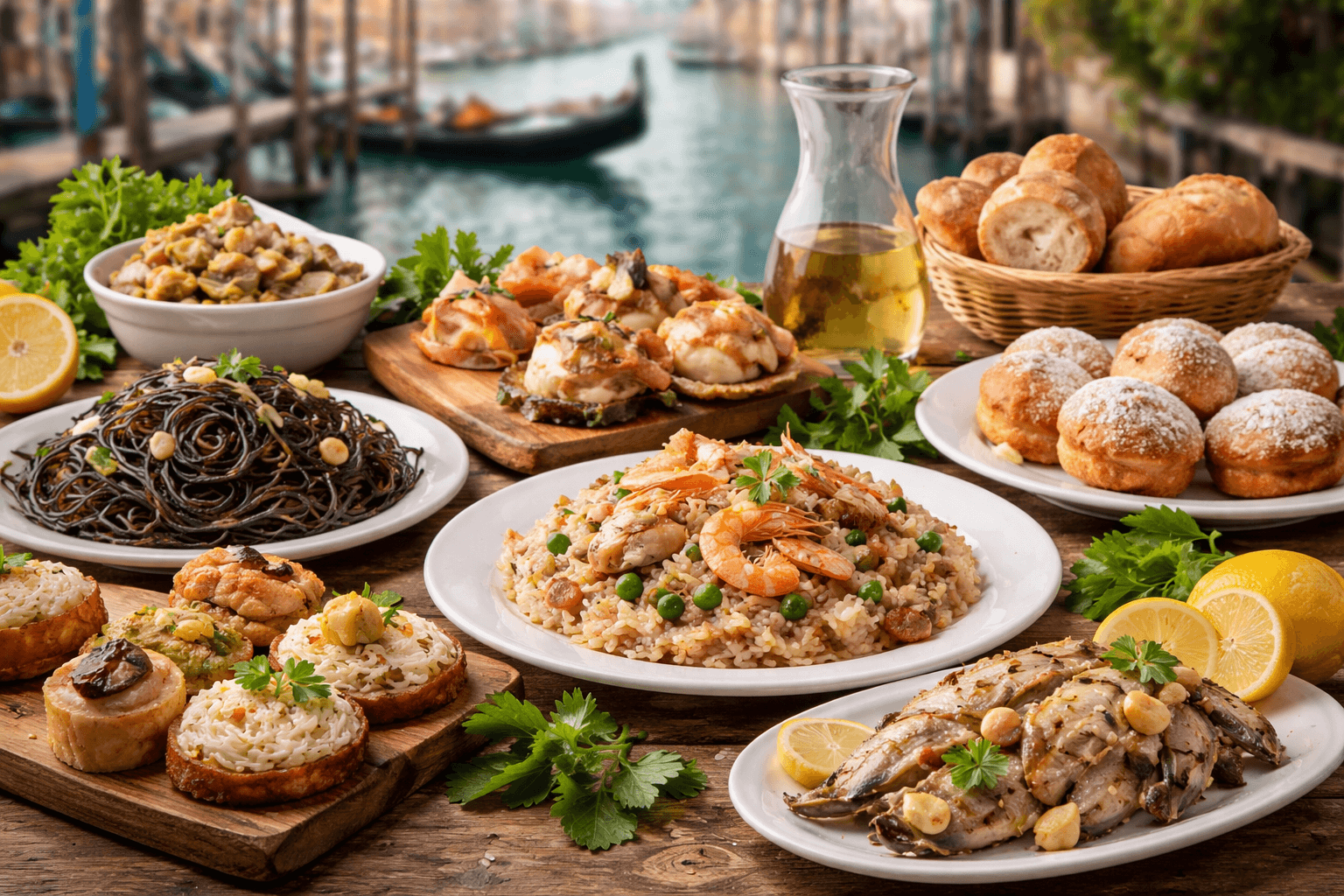
Risi e bisi is one of the most representative dishes to enjoy in Venice in March. It is a creamy soup of rice and fresh peas, often enriched with a touch of pancetta and grated cheese. This dish symbolizes the arrival of spring and the rebirth of nature. It is linked to the feast of Saint Mark, the city’s patron saint, and was traditionally served to the Doge as a symbolic gift. In this sense, understanding what to eat in Venice in March also means knowing the history that accompanies every recipe, because local cuisine is never just nourishment, but a cultural narrative. Among the typical Venetian dishes of this period are also sarde in saor, a sweet and sour appetizer with caramelized onions, pine nuts, and raisins.
This dish originated as a method of preserving fish for sailors and today represents one of the most authentic tastes of the Lagoon. Furthermore, in the month of March, other classics can also be savored, such as fegato alla veneziana (Venetian-style liver), seppie in umido con polenta (stewed cuttlefish with polenta), and pasta con le vongole di Chioggia (pasta with Chioggia clams). All these dishes tell the dual soul of Venetian cuisine: that of the sea and that of the land, united by a unique and centuries-old balance.
Seasonal Venetian flavors between sea and tradition
In March, Venetian markets, such as the Rialto market, fill with fresh products that influence local tables. Cuttlefish, moleche (small molting crabs), and canestrelli are absolute protagonists of seasonal recipes. These ingredients represent the transition between winter and spring because they combine light proteins and delicate marine flavors. Cuttlefish are often cooked in their ink, creating a creamy and aromatic dish that pairs perfectly with Venetian polenta, another cornerstone of local cuisine. March cuisine is also an opportunity to rediscover the products of the Lagoon islands, such as the vegetables of Sant’Erasmo, known as the vegetable garden of Venice.
Tender artichokes, asparagus, and wild herbs are grown here, appearing in “vegetable tarts” and “spring omelets.” This balance between sea and land is what makes the Venetian gastronomic experience unique, because every dish carries within it the reflection of the water and the aroma of the lagoon fields. In short, understanding what to eat in Venice in March means experiencing the natural rhythm of the city through its flavors.
The best bacari to taste authentic cicchetti
Visiting Venice in March without entering a bacaro would be like missing a fundamental piece of its culture. Bacari are small taverns where you can enjoy cicchetti, snacks similar to Spanish tapas, accompanied by a glass of wine or a spritz. At this time of year, the bacari of the Cannaregio or Dorsoduro districts offer seasonal specialties such as crostini with creamed cod (baccalà mantecato), meat meatballs, and freshly caught fried fish. These places allow you to experience the city like the Venetians, because every cicchetto tells a story of conviviality and tradition.
Venice City Pass all Inclusive 72h
Typical Venetian March sweets and historical curiosities
In March, Venetian pastry still preserves the scents of Carnival. The typical sweets of this period are frittelle veneziane, often filled with cream, zabaglione, or raisins, and zaleti, rustic biscuits made with cornflour and raisins. Both have their roots in the history of popular festivals and Renaissance banquets. These sweets are prepared according to ancient recipes, handed down from generation to generation, because sweetness has always had a symbolic role in the lagoon tradition. Another less known but particularly appreciated specialty is the bussolà buranello, typical of the island of Burano, a fragrant donut-shaped biscuit that keeps for weeks. It was once the sweet of fishermen, taken to sea because it was resistant and nutritious. In short, even in the sweets of March, the essence of Venice emerges: simple flavors, but deeply linked to daily life and collective celebrations.
Where to eat in Venice spending the right amount in March
Eating well in Venice without spending too much is possible, especially in March, when the city is less crowded. Taverns and bacari off the tourist paths offer seasonal menus at fair prices. In the districts of Castello and Cannaregio, you can find family restaurants where you can savor dishes like cuttlefish in ink or fish risotto with very fresh ingredients. The trattorias along the Fondamenta della Misericordia also offer daily dishes based on local products. Alternatively, markets like Rialto represent an excellent opportunity to buy ingredients and live a more spontaneous gastronomic experience.
Many visitors take advantage of this period to also try the tasting menus offered by historic taverns at reduced prices, due to the lower tourist influx. In short, understanding what to eat in Venice in March also means knowing where to enjoy authentic flavors without sacrificing quality or spending excessively.
Practical tips to enjoy Venice like a local
To experience Venetian gastronomy like an inhabitant of the city, it is important to follow the rhythm of the places. You start the day with a coffee and a local sweet, perhaps a frittella or a zaletto, and then have lunch in a small tavern overlooking a canal. For a snack, a cicchetto in a bacaro with an ombra de vin is a daily ritual that unites people of all ages. This way of eating encourages sociality and allows you to savor many more specialties compared to a traditional meal. Another useful tip is to choose restaurants that work with seasonal ingredients.
In March, cuttlefish, artichokes, and peas dominate Venetian tables, because their authentic flavor is best expressed only in this period. In short, what to eat in Venice in March is not a simple matter of menus, but an invitation to get to know the city through its culinary habits and its most genuine identity.
Venice City Pass all Inclusive 72h
FAQ- What to eat in Venice in March
- What is the most representative typical dish of Venice in March? Risi e bisi is considered the symbolic dish of the Venetian table in March, because it celebrates spring with fresh peas and the tradition of the feast of Saint Mark.
- Where can the best cicchetti be found in Venice in March? In historic bacari such as Cantina Do Mori, Al Mercà, and Osteria alla Vedova, where the dishes follow seasonality and local habits.
- What are the typical Venetian sweets of March? Carnival frittelle, zaleti, and bussolà buranelli are the most common sweets in this period, linked to tradition and popular festivals.
- Is it possible to eat well in Venice spending little in March? Yes, due to the lower tourist presence, many restaurants and taverns offer seasonal menus at competitive prices.
- Why is March a good time to explore Venetian cuisine? Because it is a transition month between winter and spring, in which very fresh ingredients are found and the city is more authentic and livable.