

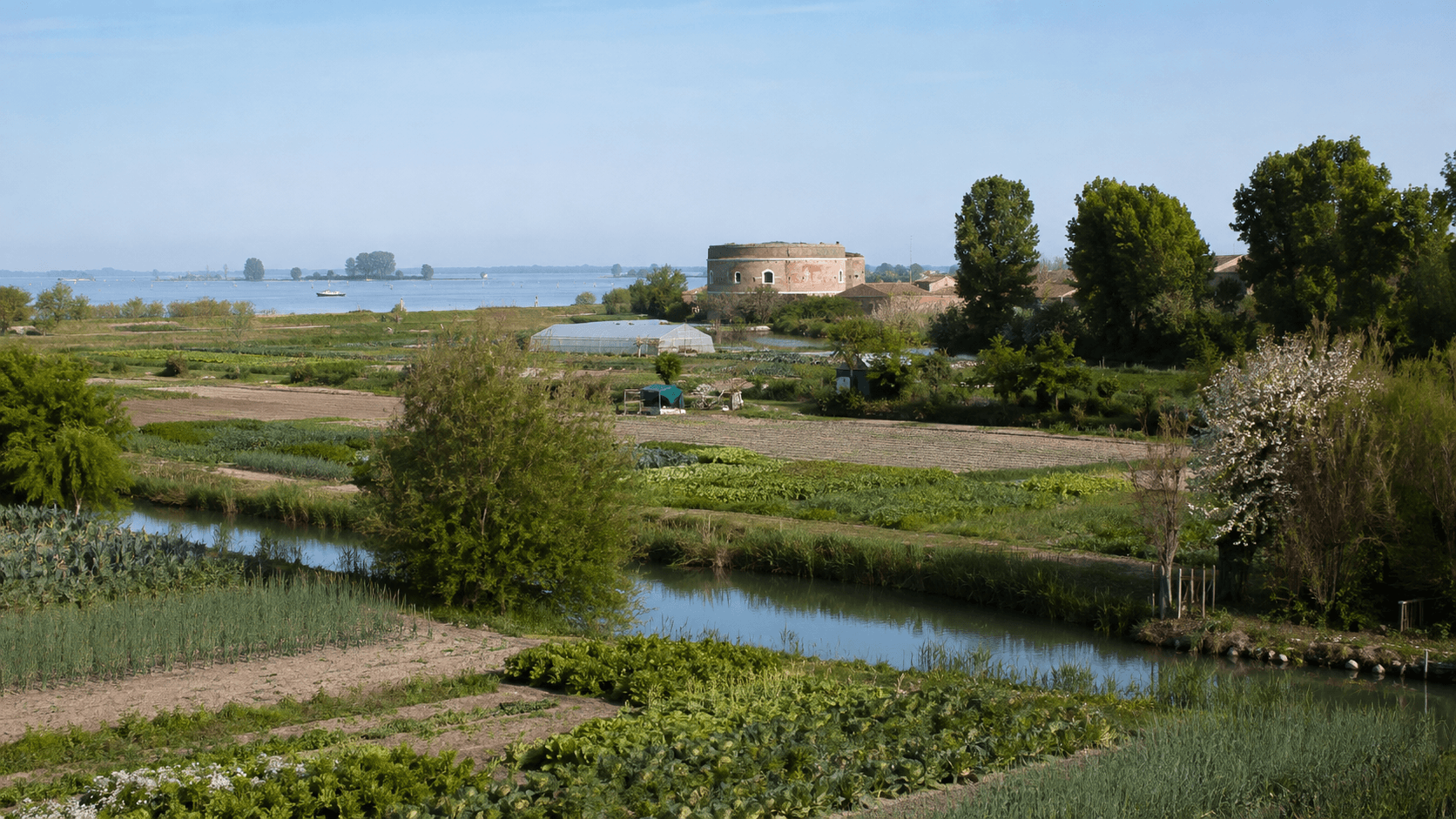
Why Sant’Erasmo is Called the Vegetable Garden of Venice: History of an Agricultural Island
The first written records of Sant’Erasmo date back to the 10th century, when the island appeared in documents of the northern lagoon as a landing site tied to Murano and Torcello. By the 11th century, a church dedicated to Saints Ermete and Erasmo—patron saints of sailors—already stood there, giving the island the name it bears today. For centuries, Sant’Erasmo was not an island isolated inside the lagoon as we know it now, but a true barrier island (lido) directly facing the Adriatic Sea. It was only after the construction of the breakwaters at San Nicolò and Punta Sabbioni between the 19th and 20th centuries that the sea shifted hundreds of meters away, leaving the island nestled in the lagoon just as we see it today.
It is precisely the unique composition of the soil—sandy yet clayey—combined with a mild, sheltered microclimate that has made Sant’Erasmo extraordinarily fertile since the Middle Ages. As early as the late 16th century, the historian and scholar Francesco Sansovino, in his work dedicated to Venice, described the island as a place capable of supplying the city with an abundance of fruits and vegetables. This agricultural calling has never been interrupted and continues today thanks to family farms that have cultivated the land for generations. Reminders of the lagoon’s historical boundaries remain in sixteen stone boundary markers (cippi) set up in 1791 to mark the lagoon perimeter: numbered stones that today allow visitors to walk along the edge of a land that once looked directly out to open sea.
This agricultural history has left a visible legacy today: the island never developed a proper urban center, and its just over 700 residents live scattered among fields in rural buildings that tell of a lagoon lifestyle completely different from that of the historic center. Unsurprisingly, between Venice and its gardens, Sant’Erasmo is still called the “Doge’s Garden” by many, as it supplied their tables as far back as the days of the Doges’ Republic (Serenissima).
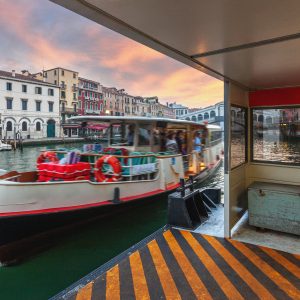
Venice vaporetto Ticket ACTV - 75 minutes
How to Get to Sant’Erasmo: Vaporetto Line 13 and Travel Times
Reaching Sant’Erasmo is easier than you might think, but it requires stepping off the beaten path. The starting point is the Fondamente Nove pier in the northern part of the historic center, where ACTV Line 13 departs toward Vignole, Sant’Erasmo, and Treporti. The crossing takes about 30 to 40 minutes depending on the stop you choose: the main ones are Sant’Erasmo Capannone, Sant’Erasmo Chiesa, and Sant’Erasmo Punta Vela, each an ideal starting point for a different area of the island.
Those staying in Venice for several days will find a multi-day pass convenient. It allows you to reach Sant’Erasmo and, on the same day or different days, visit Murano, Burano, and other lagoon islands without buying a ticket each time. This is an ideal option for anyone wanting to spend a full day in the northern lagoon, alternating stops between agricultural, artisan, and historic islands.
What to See in Sant’Erasmo: Massimiliana Tower, Church of Christ the King, and 18th-Century Boundary Stones
Sant’Erasmo is not an island of grand monuments, and that is precisely its charm: here, the landscape itself is the main attraction. Still, there are a couple of stops worth making along the way. The most recognizable is the Massimiliana Tower, a circular fortification built by the Austrians between 1843 and 1844 to defend the Lido harbor entrance while Venice was under Habsburg rule. Restored in recent decades, the tower now periodically hosts photography exhibitions, art displays, and cultural initiatives, opening to the public at certain times of the year.
In the island’s main square stands the Church of Christ the King, consecrated in 1929 in a Romanesque-Byzantine style. Inside, it preserves a canvas attributed to the school of Tintoretto depicting the Martyrdom of Saint Erasmus—a small artistic surprise in a setting otherwise dominated by nature. Strolling along the embankments, you will also encounter some of the sixteen 18th-century boundary stones that marked the old lagoon border, silent testimony to how much the area’s geography has changed over the last two centuries. From certain spots on the island, particularly near the Sant’Erasmo Chiesa stop, the view stretches across to the island of Lazzaretto Nuovo, another lesser-traveled destination in the northern lagoon.
The Violet Artichoke and Typical Produce of the Doge’s Garden
If there is one symbol that captures Sant’Erasmo better than any monument, it is the violet artichoke (carciofo violetto): a local variety recognized as a Slow Food Presidium, grown on the island for generations and prized throughout Venetian cuisine. In spring, the fields are filled with the color of its purple flower heads, and the castraure—the youngest, most tender first sprouts of the plant—are considered a true seasonal delicacy. Available for only a few weeks, they are sought after by restaurants across the city. Visitors to the island between late April and May are lucky enough to see the fields during peak harvest.
However, the artichoke is not the only star of Venice’s garden: Sant’Erasmo is also known for growing asparagus and cardoons, as well as producing wine from the Dorona grape, a native vine variety revived in recent years after nearly disappearing from the lagoon. Several family-run farms open their doors to visitors for tastings and direct sales. This gives guests a chance to sample local wine and fresh produce right where they are grown—an increasingly rare experience just a few miles from a tourist hub like Venice.
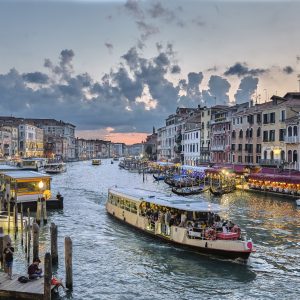
Venice: ACTV Daily Vaporetto Pass
How to Visit the Island: On Foot, by Bike, or by Boat
Sant’Erasmo is the only island in the northern lagoon that can be comfortably explored by bike, thanks to its flat, dirt paths that wind through fields, vineyards, and orchards over a length of about four kilometers (2.5 miles). Since there is no formal bike rental service on the island like in Venice, many visitors choose to bring their own bike on the vaporetto or explore on foot. Walks can range from an hour to half a day depending on how far you want to venture from the pier.
Those looking for a moment of relaxation can take advantage of the island’s small beach—a quiet, uncrowded alternative to the area’s more famous beaches. Overall, a visit to Sant’Erasmo suits a slow pace: there are no top attractions to check off a list, but rather landscapes to wander through peacefully, perhaps stopping at one of the family-run trattorias serving dishes made with ingredients grown directly on the island.
When to Go: Festivals and Events on Sant’Erasmo
The calendar on Sant’Erasmo closely follows the rhythms of agriculture. In early May, the island celebrates the Violet Artichoke Festival (Festa del Carciofo Violetto), an event featuring tastings, local markets, and social gatherings centered around the island’s signature product. It is likely the best time to visit, with fields in full bloom and a festive atmosphere that remains far removed from mass tourism. Between late May and early June, the Festival of Christ the King (Festa di Cristo Re) takes place, featuring a traditional regatta on the waters surrounding the island—a heart-felt event for the local community.
In autumn, during October, the island hosts the Grape Must Festival (Festa del Mosto), dedicated to the lagoon’s agricultural produce and the grape harvest. It is a perfect opportunity for anyone visiting Venice during the warmer part of the year looking for an experience outside typical city itineraries. Outside of these events, Sant’Erasmo remains open to visitors year-round, though keep in mind that in winter, some trattorias and farms may operate on reduced hours.
Sant’Erasmo and the Northern Lagoon Islands: A Combination Itinerary
Sant’Erasmo pairs perfectly with other islands in the northern lagoon for a full day of exploration. Nearby lies the island of Vignole, equally green and cultivated, making it an ideal mid-way stop among orchards and vineyards. Even closer is the island of Lazzaretto Nuovo, featuring a scenic trail along its ancient walls that offers a close look at the lagoon’s salt marsh (barene) ecosystem. Those with extra time can continue onward to Burano, famous for its colorful houses and lace-making, and Torcello, the oldest inhabited island in the lagoon.
For visitors who prefer not to navigate transport independently, a guided tour of the lagoon’s major islands serves as a great starting base. You can then follow up on a separate day with an independent excursion to Sant’Erasmo to experience both the artisan, vibrant side of the lagoon and its quiet, rural side at your own pace.
Venice City Pass all Inclusive 72h
Practical Tips for Your Visit
- Bring water and a snack: Dining spots on the island are limited and mostly concentrated near the main vaporetto stops.
- Wear comfortable shoes: The paths consist of dirt and unpaved sections, especially away from the docks.
- Bring a light or folding bike if possible: It is the most enjoyable way to explore the island’s four-kilometer stretch.
- Check the Line 13 schedule in advance: It runs less frequently than routes in the historic center, so plan your arrival and return carefully.
- Check dates for the Violet Artichoke Festival if visiting in spring: It is the most charming time to go, though it draws a larger local crowd.
- Mind the Venice Access Fee: As with other lagoon islands, the Venice entry fee may apply on designated days and times.
FAQ – Frequently Asked Questions About Sant’Erasmo
- How do you get to Sant’Erasmo from Venice?It is reached via ACTV vaporetto Line 13, which departs from the Fondamente Nove pier and takes about 30–40 minutes to reach the island’s stops, including Sant’Erasmo Capannone, Chiesa, and Punta Vela.
- How much time do you need to visit Sant’Erasmo?Half a day is enough for a relaxed walk along the main paths. Those who want to explore more thoroughly—perhaps by bike—or enjoy lunch at a local trattoria can easily dedicate a full day.
- Why is Sant’Erasmo called the vegetable garden of Venice?Because of its long agricultural heritage: for centuries, the island has grown vegetables—especially the famous violet artichoke—that continue to supply Venice’s markets and restaurants today.
- Can you visit Sant’Erasmo by bicycle?Yes, it is the only island in the northern lagoon easily navigable by bicycle thanks to its flat dirt paths, which are also suitable for families with children.
- When is the best time to visit Sant’Erasmo?Spring—especially early May during the Violet Artichoke Festival when the fields are in full bloom. Autumn is also a great time during the Grape Must Festival in October.
- Are there restaurants on Sant’Erasmo?Yes, there are a few family-run trattorias on the island serving dishes made from locally grown produce, particularly artichokes, asparagus, and lagoon fish.