

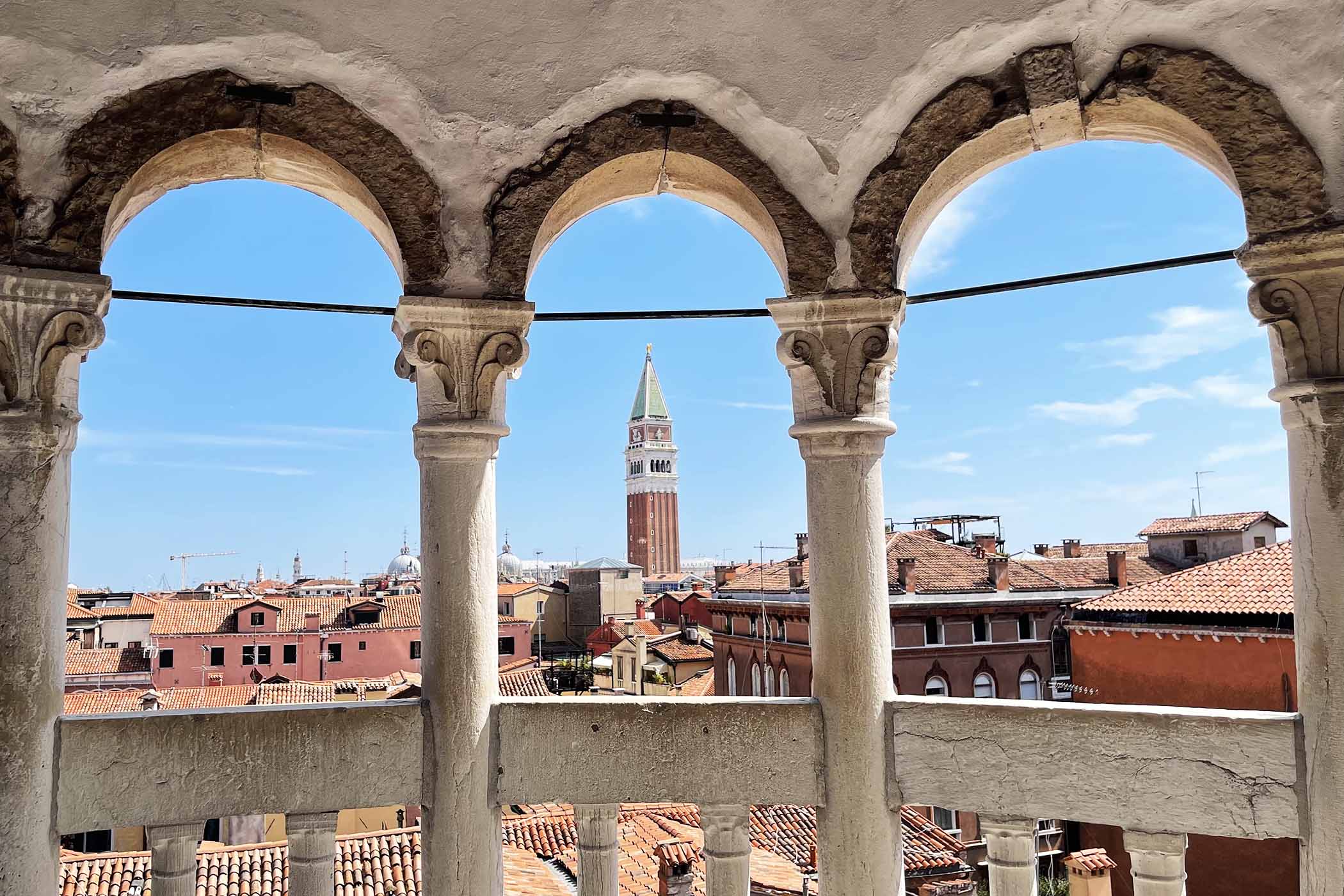
Piazza San Marco: the heart of the Serenissima
It is the elegant drawing room of Venice, the place where all explorations of the city begin and, often, end. Piazza San Marco is majestic, vibrant, crowded, and unforgettable: here, you will find the three symbolic monuments of Venice.
- St. Mark’s Basilica: Decorated with golden mosaics, Byzantine domes, and an interior that will leave you breathless. Entry to the basilica is free, but it is best to book priority access to avoid long queues, especially during the peak months of the year.
- St. Mark’s Campanile (Bell Tower): Climb to the top for a panoramic view of the entire lagoon. We recommend going at sunset when the light colors the city’s roofs and domes.
- Doge’s Palace (Palazzo Ducale): A Gothic masterpiece that served as the seat of political power for the Serenissima for centuries. The route through the frescoed rooms, the Golden Staircase, and the prisons—connected to the palace by the famous Bridge of Sighs—is absolutely unmissable.
Tip: Visit this area early in the morning or late in the afternoon, when organized tour groups start to leave.
The Grand Canal: a flowing wonder
The Grand Canal is the true main artery of the city: every curve offers a postcard-perfect view, featuring Gothic, Renaissance, and Baroque palaces facing directly onto the water.
- Among the palaces you shouldn’t miss are Ca’ Rezzonico, Ca’ d’Oro, and Palazzo Grassi.
- The most authentic way to discover the Grand Canal remains a gondola ride (shared or private): a slow, silent experience that allows you to admire the city from another perspective, perhaps at sunset.
Want to know more about gondolas? Gondolas in Venice: traditions, experiences, and useful tips for an unforgettable ride.
The Rialto Bridge and Its Markets
A symbol of the most authentic Venice, the Rialto Bridge is one of the most photographed spots in the city.
- The Bridge: Built of stone in the 16th century, it now houses artisan shops and jewelry stores. From the top, the view of the Grand Canal is spectacular.
- The Rialto Market: Open from Tuesday to Saturday, it is the beating heart of Venetian gastronomy, packed with fish stalls, fruit, and vibrant colors—ideal for a tasty mid-morning snack.
Tip: Try a cicchetto (traditional small snack) in one of the local bacari (wine bars) like a true Venetian, and enjoy the atmosphere of the less touristy squares (campi) nearby.
Want to know more about Venetian Bridges? Bridges in Venice: which ones to see, why they are important, and what stories they tell.
The Islands of Murano and Burano
An excursion to these islands is like taking two trips in one, both just a few minutes by water bus (vaporetto) from the historic center.
- Murano: World-famous for the art of glassblowing. You can visit historic glass factories and watch live as masterpieces of Venetian crystal are created.
- Burano: An explosion of colors, hanging laundry, and picturesque houses—a must-visit destination for photography lovers and those seeking the authentic atmosphere of the lagoon.
Must-see Museums
Venice is not just scenery; it is also home to culture and extraordinary collections housed in historic palaces scattered throughout the city.
- Correr Museum: Dedicated to the history of the city, it features paintings, weapons, and ancient maps overlooking Piazza San Marco.
- Gallerie dell’Accademia: The realm of Venetian art, from Titian to Tintoretto, housing one of the most important collections in the world.
- Ca’ Pesaro: Home to the International Gallery of Modern Art, perfect for lovers of 20th-century avant-garde movements.
- Museum of the 18th Century at Ca’ Rezzonico: Immerse yourself in Venetian aristocratic life of the 1700s, surrounded by original furnishings and frescoes.
Venice 11 Museum Pass + Skiptheline Entry to Doge's Palace
Hidden (but fascinating) gems
- Scala Contarini del Bovolo: A spectacular spiral staircase in the heart of Venice, often uncrowded compared to the main attractions.
- Libreria Acqua Alta: An enchanted bookstore where books are piled inside boats, bathtubs, and even a full-size gondola.
- Church of the Redentore: A Palladian masterpiece on the island of Giudecca, particularly beautiful at sunset.
For those who love atmospheres off the beaten path, it is also worth discovering the secret views of Venice and the Palazzo dei Signori della Notte, with its ancient prisons and stories linked to Casanova’s escape.
Venice: Guided Tour of the Palace and Prisons of the Lords of the Night
How to get around the attractions
Venice is primarily explored on foot, but to reach the lagoon islands or move quickly from one district (sestiere) to another, the vaporetto remains the most practical option.
Venice: ACTV Daily Vaporetto Pass
Vaporetto or Alilaguna? Find out which one to choose based on your itinerary: Alilaguna or vaporetto: differences, costs, and when it is best to use them.
Practical Tips for organizing your visit
Whether you come for a day or a weekend, Venice will surprise you at every turn. If it is your first visit, we recommend prioritizing Piazza San Marco and the Grand Canal early in the morning, leaving the lagoon islands for the afternoon or a second day.
And if you want to experience all of this without stress—with priority access, guided tours, and ready-made itineraries—the Venice Visit Pass is your perfect ally: it allows you to save time, skip the lines, and discover the city like a true insider.
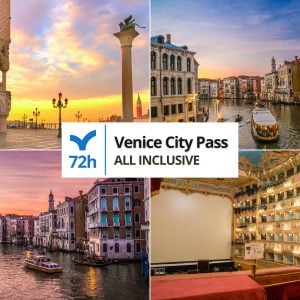
Venice City Pass all Inclusive 72h
FAQ – What to see in Venice
- How many days do you need to visit Venice? A full day is enough to see Piazza San Marco, the Grand Canal, and Rialto, but to include Murano, Burano, and the main museums, at least two or three days are recommended.
- When is the best time to visit Venice? Spring (April–May) and autumn (September–October) offer mild weather and fewer crowds compared to summer. Winter, excluding the Carnival period, also allows you to experience the city with greater tranquility.
- Is it mandatory to book entry for the Doge’s Palace and St. Mark’s Basilica? Entry to the Basilica is free but subject to long lines, so priority booking is recommended. For the Doge’s Palace, purchasing a skip-the-line ticket in advance is highly recommended, especially during high-season months.
- How do you get to Murano and Burano from Venice? Both islands are connected to the historic center via ACTV vaporetto lines, particularly Route 12 from Fondamente Nove. Alternatively, guided boat tours are available that include both islands in half a day.
- Is it worth buying a city pass to visit Venice? Yes, if you plan to visit multiple museums and historic sites in a few days. A city pass like the Venice City Pass allows you to skip the lines and often includes public transport on the vaporetto.
- What are the free attractions to see in Venice? Entry to St. Mark’s Basilica is free, as is walking along the Grand Canal, crossing the Rialto Bridge, visiting the fish market, and exploring numerous smaller squares (campi) and churches scattered throughout the city.
- Is it better to visit Venice on foot or use the vaporetto? The historic center can be easily explored on foot, while the vaporetto is essential for reaching lagoon islands like Murano, Burano, and Giudecca, or for quick trips along the Grand Canal.