

The Origins of the Venice Film Festival: From 1932 to Today
The history of the Festival begins on August 6, 1932, when what would later be remembered as edition number zero took place on the terrace of the Hotel Excelsior on the Lido. The initiative was born within the Venice Biennale, the cultural institution founded in 1895, through the vision of Count Giuseppe Volpi di Misurata, alongside sculptor Antonio Maraini and Luciano de Feo. The first film screened was Rouben Mamoulian’s Dr. Jekyll and Mr. Hyde, and the event—not yet competitive—attracted over 25,000 spectators: an extraordinary success for the time, which convinced organizers to make it a recurring event.
It was with the second edition in 1934 that the Festival assumed a competitive dimension: the Mussolini Cup was created, awarded to the best Italian film and best foreign film, while the festival remained tied to the Art Biennale calendar. The war years marked a complicated parenthesis: the 1940, 1941, and 1942 editions took place away from the Lido in a climate heavily conditioned by the conflict, to the point of being considered non-occurred editions in the official history of the event.
The post-war period brought the Festival back to the Palazzo del Cinema on the Lido and marked its international rebirth. The highest honor changed names several times, from the International Grand Prix of Venice to the Lion of Saint Mark, until becoming, in 1954, the Golden Lion we know today. Another crucial moment arrived in 1968: following student protests, awards were abolished for a whole decade, and the festival went through a more experimental and non-competitive phase before returning, between the 1970s and 1980s, to the format that still characterizes it today. Since 2011, the artistic direction has been entrusted to Alberto Barbera, who brought the Festival back to the center of the global cinematic scene, capable of balancing major Hollywood productions, auteur cinema, and Oscar-bound premieres.
Venice City Pass all Inclusive 72h
The Golden Lion: History of the Festival’s Most Prestigious Award
The Golden Lion takes its name from the Lion of Saint Mark, symbol of the city of Venice, and represents today one of the most coveted awards in world cinema, alongside the Palme d’Or at Cannes or the Golden Bear in Berlin. Its path, however, was anything but linear. Until the fall of the fascist regime, the main prize was called the Mussolini Cup, awarded in parallel to the best Italian film and best foreign film: an approach that reflected the propaganda climate of the era in which the Festival was born. In the post-war era, the recognition changed identity several times, becoming the International Grand Prix of Venice between 1947 and 1948, and the Lion of Saint Mark between 1949 and 1953, won for the first time by Henri-Georges Clouzot’s Manon.
Only from 1954 did the prize take on the definitive name of Golden Lion. Since then, the festival’s roll of honor tells the history of great international cinema, with a unique parenthesis between 1969 and 1979, when the Festival went through a non-competitive phase in which the Golden Lion was not awarded. Alongside the award for best film, the Golden Lion for Lifetime Achievement was established in 1968 to recognize the complete body of work of great global cinema figures, while the Volpi Cup has rewarded the best male and female performances for decades. Each edition, the award ceremony on the final evening remains the most anticipated moment of the festival, followed live by fans and industry insiders worldwide.
How the Festival Works Today: Sections, Jury, and Red Carpet
The contemporary Festival operates on multiple levels. The heart of the event is the Official Selection, which includes the competition for the Golden Lion, the Orizzonti section dedicated to the most innovative trends in international cinema, and out-of-competition screenings, often reserved for highly anticipated Hollywood premieres. Alongside the official program curated by the Biennale’s artistic direction, two independent showcases run in parallel and are widely followed by cinephiles: International Film Critics’ Week, dedicated to debut features, and Venice Days (Giornate degli Autori), promoted by Italian directors’ and authors’ associations.
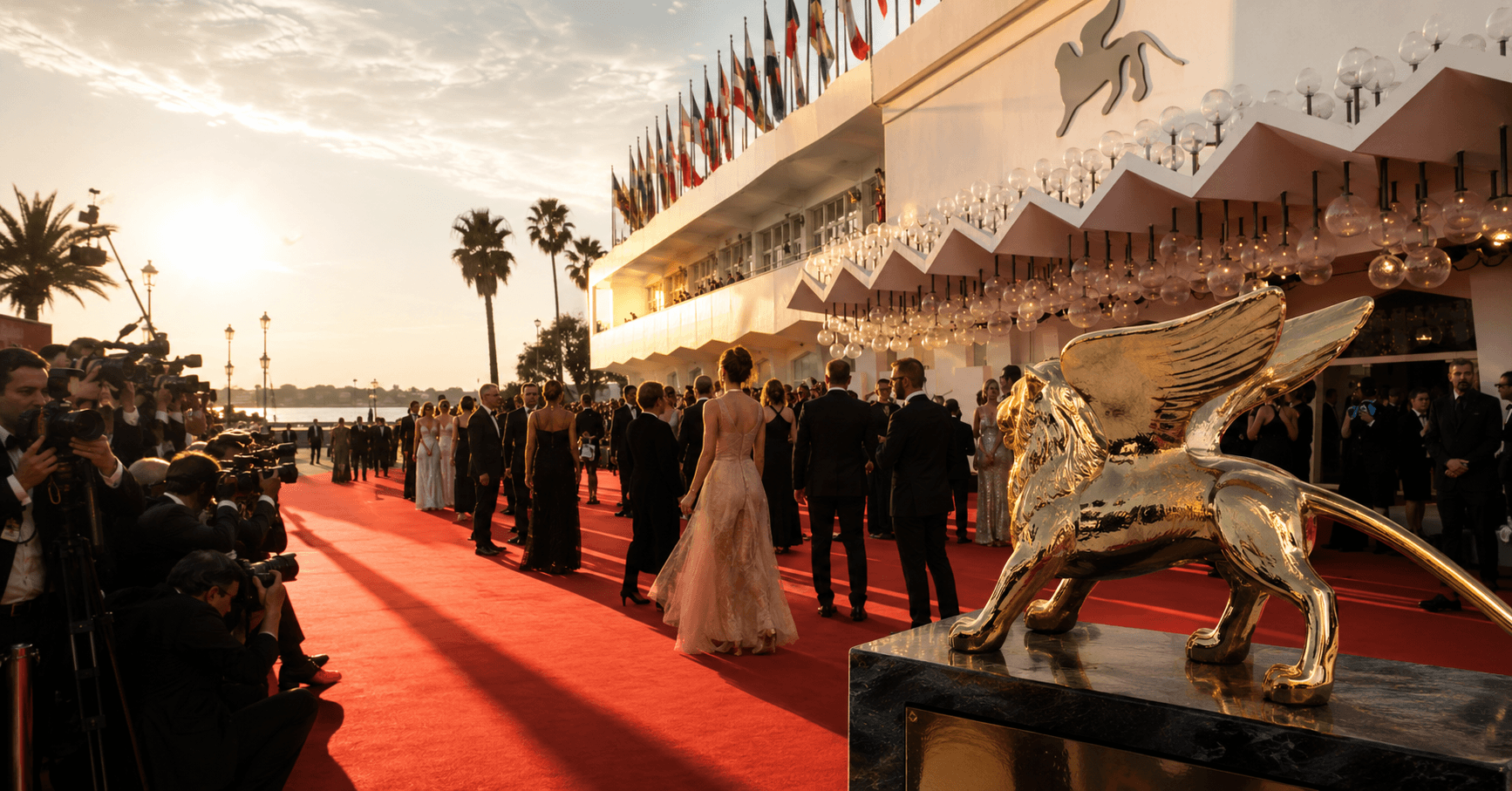
Each edition features an international jury chaired by a major world cinema personality, tasked with deciding the assignment of the Golden Lion and other official awards on the closing night. Screenings take place in the halls of the Palazzo del Cinema, starting with the grand Sala Grande, as well as at the PalaBiennale and other venues set up specifically on the Lido for the occasion. The most photographed moment remains, of course, the red carpet: every evening in the late afternoon, actors and directors walk up the steps of the Palazzo del Cinema in front of hundreds of photographers, a ritual lasting over ninety years that continues to draw curious onlookers and fans from all over the world to the Lido.
Palazzo del Cinema and the Lido of Venice: The Heart of the Festival
The Palazzo del Cinema, overlooking the Marconi seafront, has been the focal point of the Festival since the 1930s: inside are the Sala Grande, seating over a thousand people, and the smaller Zorzi and Pasinetti halls. But over these eleven days, the festival ends up animating the entire Lido of Venice, the eleven-kilometer-long barrier island separating the lagoon from the Adriatic Sea. Gran Viale Santa Maria Elisabetta, connecting the vaporetto landing stage to the beach, fills with TV crews, barriers, and onlookers waiting to catch a glimpse of a famous face, while the island’s historic Art Nouveau hotels, such as the Hotel Excelsior and the former Grand Hotel des Bains, once again become the focal point of the international jet set, just as they did in the early decades of the festival.
Beyond the festival days, the Lido is a place that deserves a visit in its own right: fully equipped beaches, long tree-lined avenues, early 20th-century Liberty villas, and even the unique opportunity in Venice to move around by bicycle or car make it a different, relaxing stop compared to the historical center. For those visiting Venice during the festival days, combining a stroll on the Lido with exploring St. Mark’s or the Rialto is probably the most complete way to experience the city at this time of year.
How to Reach the Lido During the Film Festival
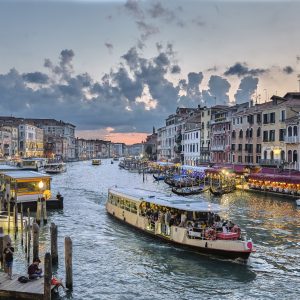
The Lido is not connected to Venice by bridges: it can only be reached by water, which during festival days means dealing with significantly heavier vaporetto traffic than usual. The main ACTV lines are 1, 5.1, and 5.2, connecting the Lido to San Zaccaria, St. Mark’s Square, and Santa Lucia railway station, along with the faster line 6 active in summer months between San Zaccaria and the Lido. The crossing generally takes between 10 and 20 minutes depending on the route and boarding point.
During festival days, it is wise to factor in longer wait times, especially in the evening when both festivalgoers and tourists gathering to watch the red carpet concentrate at the docks. For those staying in the historic center planning multiple trips to the Lido—perhaps combining it with Murano and Burano—a multi-day transport pass is far more convenient than buying single standard tickets.
Venice: ACTV Daily Vaporetto Pass
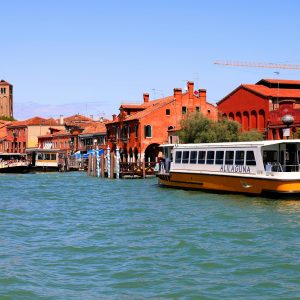
An interesting alternative, especially for those staying near Marco Polo Airport or wishing to travel by water to the historic center, is the Alilaguna Pass. It directly connects the airport to the Lido and other lagoon islands with regular scheduled trips, available in 24- or 72-hour versions.
Alilaguna Pass 24h-72h: boat transfer in Venice
Where to See the Stars: Practical Tips for the Red Carpet
Attending the Festival’s red carpet is an experience open to everyone, not just accredited guests: the red carpet takes place outdoors in front of the entrance to the Palazzo del Cinema and is visible for free from barricaded public areas along Lungomare Marconi. To secure a good spot, it is best to arrive well in advance—often early afternoon for the most anticipated arrivals—bringing along water and snacks, as the wait can last several hours before the stars pass by, usually in the late afternoon or early evening.
The schedule of screenings and public events is published weeks in advance on the official Venice Biennale website, where tickets for public screenings (distinct from those reserved for press and badge holders) can also be purchased. For those who simply want to soak in the atmosphere without necessarily seeing a film, even a simple walk along the Gran Viale during key festival days offers an authentic, informal glimpse into the event compared to the red carpet proper, amid TV crews, film buffs, and onlookers from all across Italy.
What to Do on the Lido Beyond Cinema
Visitors arriving at the Lido during the Festival would do well to set aside time away from the screening rooms and red carpets. The island retains a very different vibe from the historic center: wide tree-lined avenues, early 20th-century Art Nouveau villas, and a beach that offers rare moments of relaxation during quieter morning hours just a short vaporetto ride from St. Mark’s Square. Gran Viale Santa Maria Elisabetta serves as the main orientation point, while those who enjoy walking or cycling can venture as far as Alberoni, where sand dunes and wilder shores reveal a side of the Lido far removed from festival glamour.
For longer stays, a trip to Malamocco, an ancient fishing village on the southern end of the island, or an excursion to neighboring Pellestrina allows you to discover a side of the lagoon virtually unknown to passing tourists. In the evening, after taking in the red carpet, many choose to head back toward the historic center for a spritz at a traditional bacaro or a romantic gondola ride along the Grand Canal—the quintessential way to round off a day in Venice.

Private Gondola Ride in Venice (Max 5 Guests)
Where to Stay During the Venice Film Festival
During the festival, hotel availability on the Lido drops drastically and prices rise significantly due to crews, industry professionals, and film lovers arriving from across the globe. Anyone wanting to experience the festival atmosphere 24/7 with the ability to walk to the Palazzo del Cinema must book far in advance, often several months ahead. Alternatively, staying in Venice’s historic center—such as in Cannaregio or Santa Croce—and taking the vaporetto to the Lido for the red carpet remains a more budget-friendly and convenient option for those who still want to spend part of their trip exploring the city.
When to Go: September in Venice Between Festival and Peak Season
The Film Festival traditionally takes place between late August and the first half of September, a period when Venice still sees sustained tourist crowds alongside pleasant temperatures and long days—ideal for pairing sightseeing with relaxing moments on Lido beaches. Keep in mind that alongside standard peak-season crowds, festival days bring an additional influx of visitors concentrated mainly around the Lido area and vaporetto routes to St. Mark’s: booking transport, lodging, and tickets for major attractions well in advance is the best way to enjoy the period stress-free.
FAQ – Venice Film Festival
- When does the Venice Film Festival take place?
The Festival is held every year between late August and the first half of September on the Lido of Venice. The 2026 edition, the 83rd, takes place from September 2 to 12, with a pre-opening evening on September 1. - What is the Golden Lion?
It is the highest award presented to the best film in competition. Named after the Lion of Saint Mark, symbol of Venice, it took its current name in 1954 after previously being known as the Mussolini Cup, International Grand Prix of Venice, and Lion of Saint Mark. - Is it possible to see the red carpet without a ticket?
Yes. The red carpet takes place outdoors in front of the Palazzo del Cinema and is visible for free from public barricaded areas along the seafront, provided you arrive early relative to scheduled guest arrival times. - How do you reach the Lido of Venice from St. Mark’s Square?
Via ACTV vaporetto lines 1, 5.1, and 5.2, or line 6 during summer months, boarding from San Zaccaria. The crossing takes approximately 10 to 20 minutes depending on the line. - Is it worth staying on the Lido during the Film Festival?
It depends on your travel style: staying on the Lido lets you experience the festival 24/7, but availability is limited and prices spike significantly. Staying in the historic center and commuting by vaporetto is often a more economical choice. - Is it the oldest film festival in the world?
Yes. The first edition dates back to 1932, making the Venice Film Festival the oldest active film festival in the world, predating both Cannes and Berlin.