

How to get to Venice by train: stations, transfers, and essential tips
- 9 min read
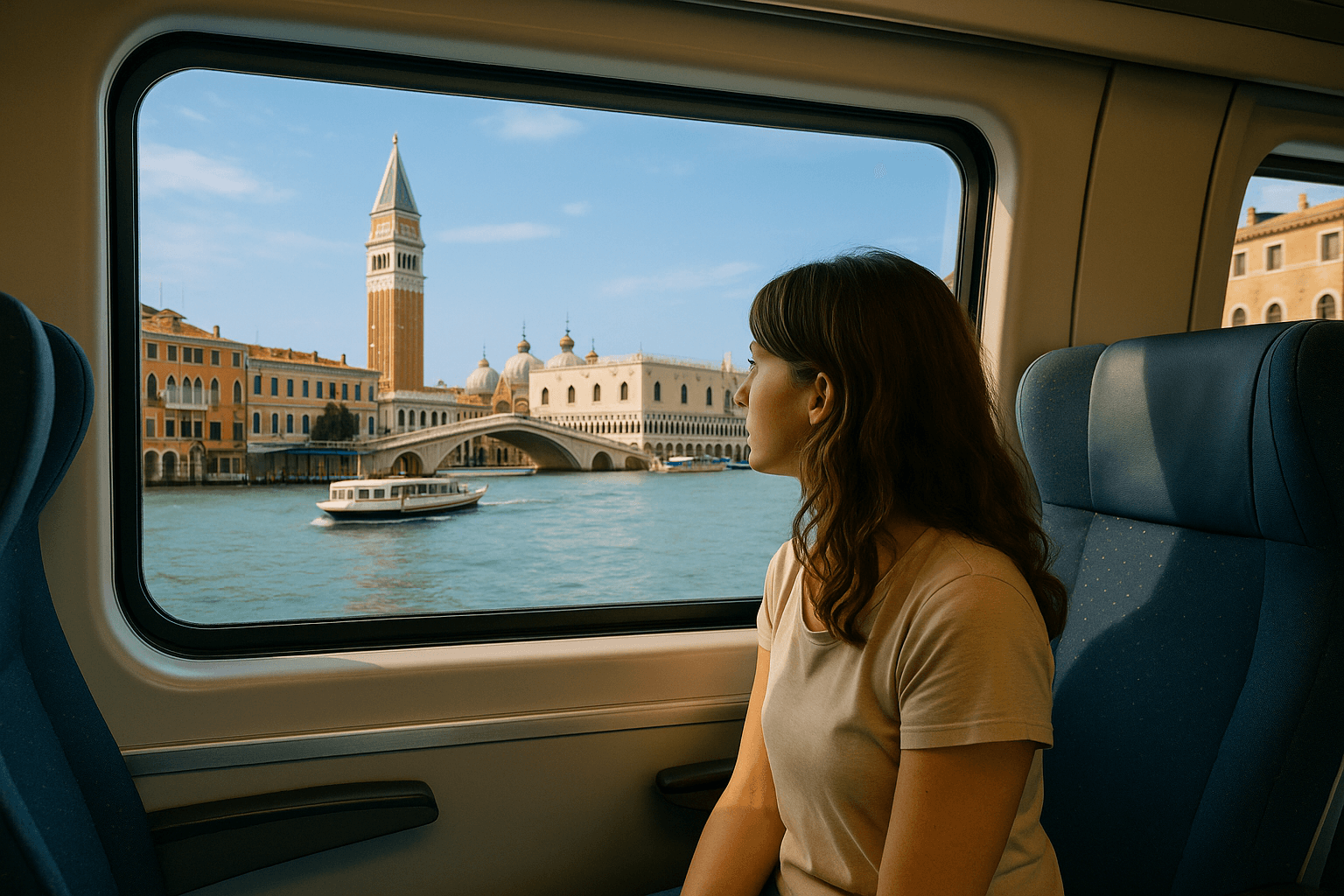
Arriving in Venice by train is a unique experience even before setting foot in the water city. The atmosphere changes as the train crosses the railway bridge connecting the mainland to the island, as the lagoon suddenly appears, anticipating what awaits the visitor. However, choosing the train is not only romantic: it is also practical, sustainable, and convenient, especially because Venice is completely pedestrian. For this reason, many travelers prefer to avoid cars and ferries, relying on the railway network which allows them to reach the heart of the city without stress and without the risk of traffic delays.
Venice: ACTV Daily Vaporetto Pass
Which Stations to Use to Arrive in Venice by Train
The first important decision concerns the arrival station, as Venice has two main stops: Venezia Santa Lucia and Venezia Mestre. This distinction can create confusion because many visitors believe that Mestre is part of the historic center, but it is actually on the mainland and requires an additional transfer to reach the island of Venice.
Venezia Santa Lucia, on the other hand, is the ideal destination for those visiting the city, as it offers direct access to the calli (streets) without the need for further transportation. Arriving in Venice by train and getting off here means immersing yourself in Venetian life: the Grand Canal opens up in front of the exit, the vaporetti (water buses) wait just a few steps away, and the calli immediately begin to intertwine in a fascinating labyrinth.
Mestre can be convenient for cheaper overnight stays, but it involves an additional transfer and an increase in travel time to reach the main attractions. Because of this, those who wish to visit the city without wasting time should always select Santa Lucia as their final station.
For tourists arriving in Venice for the first time, Santa Lucia represents a kind of magical door: the noise of the train fades, giving way to the sounds of the water, the footsteps of visitors, and the calls of the gondoliers. In short, it is the most logical and evocative choice to start the journey.
Differences Between Venezia Santa Lucia and Venezia Mestre
Understanding the differences between the two stations is fundamental because it directly affects the travel experience. Venezia Santa Lucia is the only station actually located in the historic center, free of cars and completely connected to water transport. It is perfect for those who want to quickly reach hotels, monuments, and museums without further land transport. The very atmosphere of the station reflects the nature of the city: bridges, canals, and vaporetti are already visible just outside.
Venezia Mestre, on the other hand, is a modern and very active railway junction, but it does not allow immediate access to the city’s most iconic areas. Due to its location on the mainland, it requires a further local train or a bus to cross the Ponte della Libertà and reach Santa Lucia. For some travelers, this may be acceptable, especially for those staying in the hinterland, but for the visitor who wants to optimize time, Santa Lucia remains the ideal solution.
Arriving in Venice by train directly at Mestre means finding yourself in an urban environment like many others, while Santa Lucia immediately offers the authentic context of the lagoon. It is precisely this difference that makes the two choices so far apart.
In summary, Mestre is convenient as a logistical base, but Santa Lucia remains the true gateway to the historic city.
How to Reach the Historic Center After Arriving in Venice by Train
Once you arrive in Venice by train and alight at Santa Lucia, there are three main ways to move towards the center: vaporetto, walking, or water taxi. Each option has specific advantages, but the choice depends on the time available, the budget, and the location of the accommodation.
The vaporetto represents the most classic solution, as it connects the station to areas like Rialto, San Marco, and Accademia with regular frequency. This means of transport allows you to experience the Grand Canal as a first scenic tour. Those who prefer to walk can opt for a pedestrian route full of picturesque glimpses, although due to the numerous bridges the journey can be demanding, especially for those traveling with heavy luggage.
The water taxi, on the other hand, is fast and comfortable, but more expensive and is often used by those who need to reach isolated hotels or have superior comfort needs. The best choice always depends on the type of trip planned.
In summary, Venice offers modes of movement very different from any other Italian city, but this is precisely what makes the transfer from the station a suggestive and engaging moment.
Venice: ACTV Daily Vaporetto Pass
Moving by Vaporetto, Water Taxi or on foot
The vaporetto is often the most balanced choice because it combines practicality and spectacular views along the Grand Canal. The main public transport lines pass right in front of the station, allowing arrivals to quickly orient themselves. However, during peak hours, the vehicles can be crowded, due to the high volume of tourists and commuters.
Walking remains a popular option because it allows you to immediately experience the Venetian spirit. The directions towards San Marco and Rialto are clearly visible, but it is common to get lost in the narrow alleys, even if this is part of the city’s charm. The pedestrian network, although intricate, is designed to guide visitors in the main directions without too much risk of error.
The water taxi is ideal for those seeking a direct and comfortable solution, but the high costs make it a less frequent choice. Due to the urban structure, it can be the best means, especially for those staying in less accessible areas, such as some parts of Giudecca or the Lido.
In summary, Venice invites you to move slowly and observe what surrounds you, because every movement becomes part of the experience.
Costs, times and practical advice for those arriving in Venice by train
Regarding transport, Venice offers various types of tickets and passes that allow you to move with greater flexibility. The convenience depends on the length of the stay, but in many cases, tourist passes are more advantageous due to unlimited rides.
Travel times are variable because the vaporetti make numerous stops, and their duration increases during the most crowded hours. Movements on foot depend on personal pace and the ability to orient oneself, while water taxis guarantee faster routes.
Knowing these differences helps you plan your day better. Due to the particular urban structure, it is always advisable to evaluate the location of the hotel before choosing the means of transport.
In summary, being informed allows you to save time and experience the city with greater tranquility.
Orienting yourself in Venice after arrival: useful tips
One of the most surprising aspects for those arriving in Venice by train is the need to orient themselves without the aid of cars or wheeled vehicles. The city is a tangle of calli, fondamenta (canalside walkways), and bridges that can seem complex, but following the yellow signs allows you to easily reach the main areas.
Many visitors are surprised to find how simple it is to get around after just a few minutes of walking, because the city follows a logic all its own. Due to the absence of road traffic, the exploration experience is more relaxed, but it is essential to have a map or a smartphone with GPS with you to avoid overly long detours.
Furthermore, Venice naturally invites you to slow down. The journey to a destination can turn into a continuous discovery: hidden squares (campi), small shops, and scenic bridges. Orienting yourself becomes an integral part of the experience.
What to expect when arriving in Venice by train
Arriving in Venice by train involves an immediate change in the way you move, because the city does not allow cars, buses, or traditional taxis. All movements occur on foot or on the water, but this contributes to making the atmosphere unique.
The Santa Lucia station offers direct access to the historic center, while Mestre requires an additional transfer. The tourist must expect bridges, calli, and pedestrian paths that require a slow approach, due to the urban morphology.
Preparing for these characteristics allows you to enjoy a more peaceful trip, because understanding the Venetian logistics helps avoid unforeseen events. The city invites you to let yourself be guided by your own rhythms and to observe what surrounds you, transforming every movement into a small journey.
Venice: ACTV Daily Vaporetto Pass
FAQ – How to get to Venice by train
- Where should I get off the train in Venice?
The recommended station for tourists is Venezia Santa Lucia, because it is already in the historic center. - How far is St. Mark’s Square from the Venice station?
It can be reached in 35–45 minutes on foot, or in about 35–40 minutes by vaporetto. - How much does the vaporetto cost from Santa Lucia Station to St. Mark’s Square?
A single ticket costs from €10, but there are more convenient passes available. - How can I get to the center of Venice from the train station?
The main options are vaporetto, walking, or water taxi. - What is the train stop for the center of Venice?
The most convenient stop is Venezia Santa Lucia. - What is the best way to get around Venice?
On foot for short distances, by vaporetto for longer distances.