

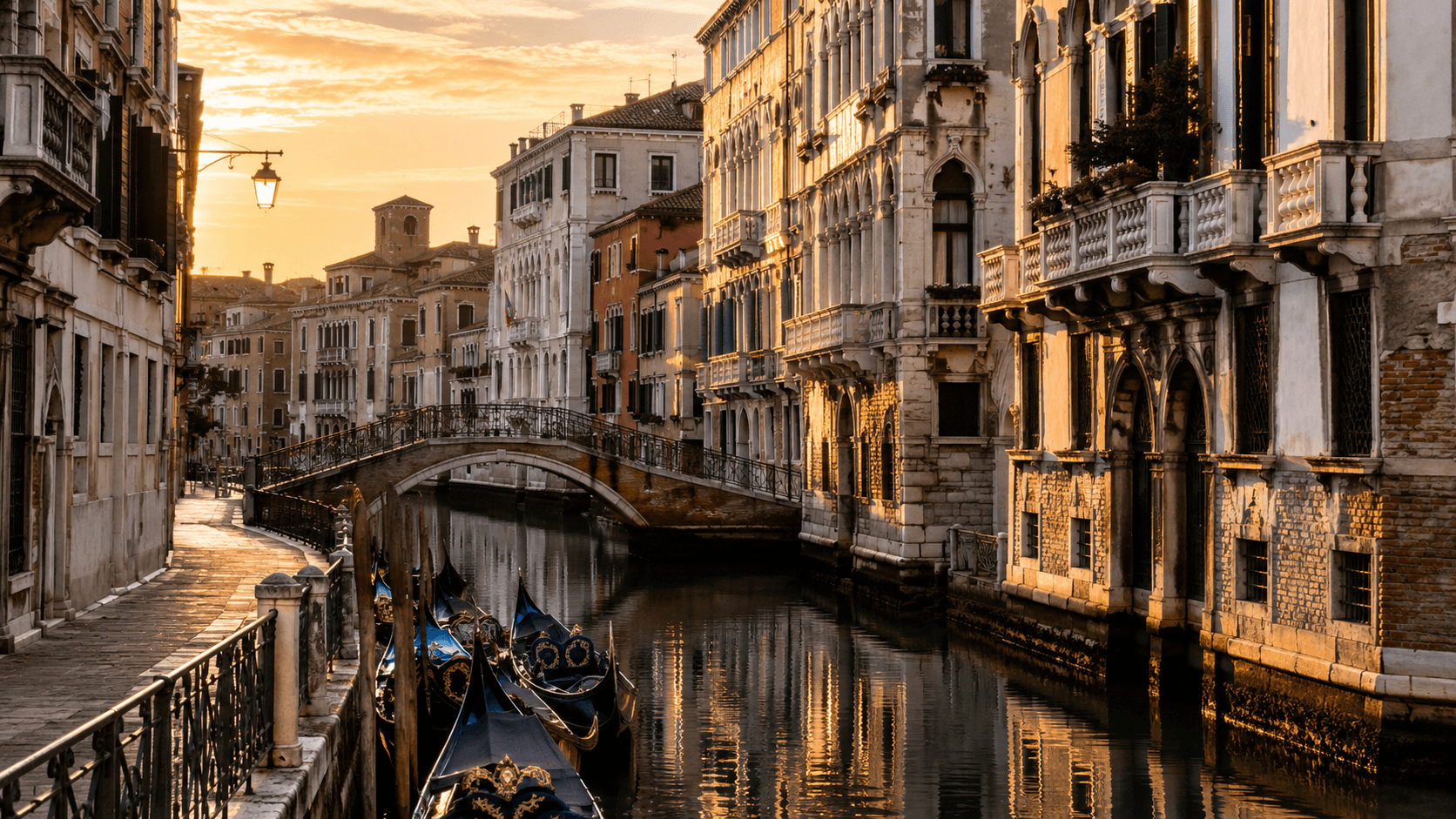
When to go: the months and times that truly make a difference
The first factor determining how much crowd you will encounter is not the monument you visit, but the moment you visit it. Venice has two very marked peaks in attendance: Easter week / spring long weekends and the months of July and August, in addition to the weekends of Carnival. If you can choose, the quietest periods remain late January–February (outside of Carnival weekends), the second half of November, and the first days of December before the Feast of the Immaculate Conception long weekend.
Within the same day, the rule is just as simple: the 10:30–16:00 time slot is when organized groups and day-trippers from cruise ships arrive. Those who visit the main monuments before 9:30 or after 17:00 find drastically shorter lines, better light for photos, and a completely different atmosphere.
The neighborhoods that most tourists forget to visit
San Marco, Rialto, and the surrounding areas concentrate almost all tourist flows, but they are only two of the city’s six districts (sestieri). Moving away even by ten minutes on foot completely changes the perspective.
Cannaregio and the Jewish Ghetto
Cannaregio is the district most inhabited by Venetians themselves. The Jewish Ghetto, the oldest in Europe, preserves sixteenth-century synagogues and an intimate atmosphere very far from the chaos of Piazza San Marco. A guided tour inside the synagogues allows you to discover historical details that are hard to notice when walking alone.
Dorsoduro, the artists’ quarter
Less crowded but rich in charm, Dorsoduro hosts the Gallerie dell’Accademia and the Peggy Guggenheim Collection. Campo Santa Margherita, not far away, is one of the favorite meeting places for Venetians for an evening aperitif and is rarely overrun by tourists.
Sant’Elena and Castello
At the eastern end of the city, Sant’Elena is an almost exclusively residential neighborhood, with trees, green areas, and very few visitors. It is the ideal choice for a break away from the center without having to leave Venice.
St. Mark’s Basilica and the Doge’s Palace without the endless lines
They are the two most visited monuments in the city and, not surprisingly, those with the longest lines. Avoiding the central morning hours is the first rule: the 8:30–9:30 slot and the one after 16:30 are much more manageable. The second rule is to book skip-the-line access online, which in Venice saves even more than an hour compared to direct entry during high season.
A guided tour that includes both sites, besides guaranteeing priority entry, adds historical narration that allows you to appreciate otherwise invisible details, from the Doge’s rooms to the prisons connected by the Bridge of Sighs.
Errore: Impossibile caricare il prodotto.Alternatively, for those who want to visit more civic museums with a single ticket without giving up skip-the-line access to the Doge’s Palace, there is a dedicated pass:
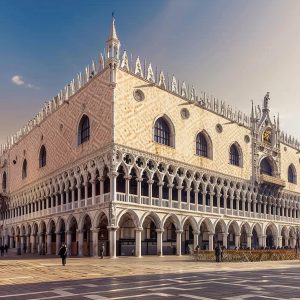
Venice 11 Museum Pass + Skiptheline Entry to Doge's Palace
The Rialto market, before the tourists arrive
The Rialto Bridge is crowded practically at any time of day, but the market surrounding it has a rhythm all its own. Those who arrive by 8:00 in the morning still find the fish and vegetable stalls in the full swing of their daily activity, with vendors talking to each other in the Venetian dialect and very few tourists around. It is one of the most authentic glimpses the city can offer, and it lasts only a few hours: around noon the market closes and the atmosphere changes completely.
After visiting the market, Venetian cicchetti in the local bacari are a perfect way to have breakfast or an early light lunch, before the most famous spots fill up.
A gondola ride off the beaten track
The gondola remains the symbolic experience of Venice, but not all routes are equal in terms of crowding. Itineraries that move away from the central stretch of the Grand Canal, heading into secondary canals, offer the same atmosphere with much less boat traffic.

Venice: Shared Gondola Ride Across the Grand Canal
For those looking for more privacy, or traveling in a group or family, an exclusive option is also available:

Private Gondola Ride in Venice (Max 5 Guests)
The lagoon islands: Murano and Burano without the chaos of the historic center
A good part of the relief from the crowd is found simply by leaving the main island. Murano, famous for glassmaking, and Burano, with its colorful houses, remain much less overcrowded compared to San Marco, especially in the early part of the morning or late afternoon. A tour that includes both islands, with a stop at a glass furnace, allows you to see live the artisanal craftsmanship that made Murano famous worldwide.
Errore: Il prodotto non è pubblicato.Practical tip: choosing a tour that covers two islands leaves more free time to dedicate to each, instead of reducing the visit to a quick photo stop.
Unusual places: from secret prisons to the hidden spiral staircase
Venice hides corners that remain off standard itineraries precisely because they are less advertised, and for this reason, they are almost always empty even in high season.
The Palace of the Lords of the Night
Less known than the prisons connected to the Doge’s Palace, this route leads through secret cells and the torture room, with tales that also retrace Casanova’s legendary escape.
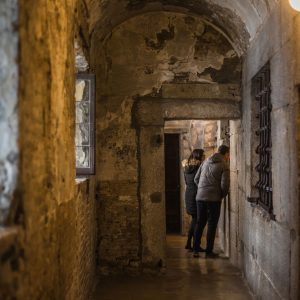
Venice: Guided Tour of the Palace and Prisons of the Lords of the Night
A walking tour through hidden streets and squares
For those who prefer to explore independently with a dedicated guide, there is also a route designed specifically to get off the main paths, discovering the Venice of nobles and lesser-known historic palaces.
Venice: hidden and unusual walking Tour
Views without crowds: the St. Mark’s Campanile and Punta della Dogana
Anyone looking for a bird’s-eye view of Venice almost automatically associates the thought with the long line at the St. Mark’s Campanile during central hours. Here too, priority entry radically changes the experience, allowing you to go up in a few minutes instead of after a wait that in high season can exceed an hour.

Tickets for the Bell Tower and the historic gallery of St. Mark's Square
For those who prefer to combine the ascent to the Campanile with a broader walking tour of the historic center, there is also a combined option:
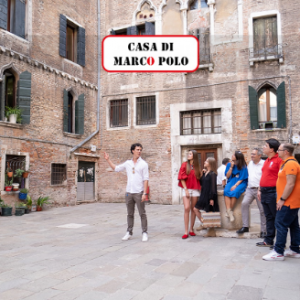
Unusual walking tour of Venice + priority entry to the Campanile of St. Mark
If instead you are looking for a lesser-known but equally suggestive panorama, Punta della Dogana, at the tip of Dorsoduro, offers an open view of the lagoon that is almost always free from crowds, especially at sunset.
How to get around the lagoon without stress
Getting around also affects the overall experience: water buses (vaporetti) during peak hours (8:00–9:30 and 17:30–19:00) are often full along the main lines of the Grand Canal. Planning journeys outside these slots, when possible, makes every trip more comfortable, as well as more pleasant for enjoying the view from the water.
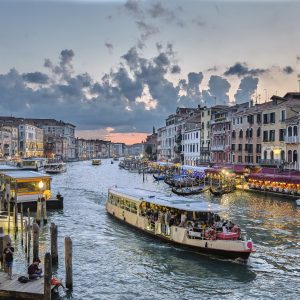
Venice: ACTV Daily Vaporetto Pass
A single pass to skip lines everywhere
For those who want to simplify organization as much as possible, passes that combine transport and skip-the-line entry to main museums remain the most efficient solution: a single ticket, no line at the ticket office, and more time to dedicate to the actual visit rather than waiting.
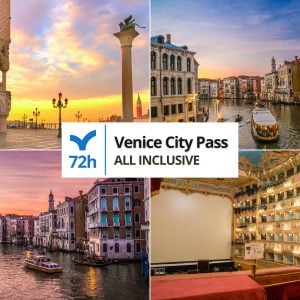
Venice City Pass all Inclusive 72h
24 and 48-hour versions are also available for shorter stays, as well as a version designed for families that combines a gondola, St. Mark’s Basilica, and the Doge’s Palace in a single package:
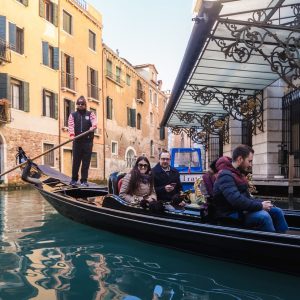
Venice Family Pass: Gondola + St. Mark's Basilica + Doge's Palace
A break away from the center: the Lido and city parks
When the desire for crowds runs out, a water bus takes you in a few minutes to the Lido of Venice: beaches, open air, and a completely different pace compared to the historic center. The southern area of the island, Alberoni, is particularly suitable for those looking for dunes, nature, and almost absolute silence.
Alternatively, without leaving the main island, the large park of Sant’Elena remains one of the few green corners of the city where you can walk among pine trees, take a break, or simply enjoy a few hours away from tourist flows, with dawn being the ideal time for some birdwatching in total tranquility.
FAQ – Venice without crowds
- What is the best period to visit Venice without too many crowds? Late January–February (outside of Carnival weekends), the second half of November, and the first days of December, before the Immaculate Conception long weekend, are the periods with fewer visitors. Among the warmer months, June and September remain preferable to July and August.
- What time is best to visit Piazza San Marco to avoid the crowds? The best times are before 9:30 in the morning and after 17:00, when organized groups and day-trippers have already left the square or have not yet arrived.
- Is it worth booking skip-the-line tickets for the Doge’s Palace and St. Mark’s Basilica? Yes. In high season, the wait at the ticket office can exceed an hour; a priority entry booked online reduces the wait to a few minutes and allows you to plan the visit with certain times.
- Which neighborhoods in Venice are less crowded? Cannaregio, Dorsoduro, and Sant’Elena remain much quieter compared to San Marco and Rialto, despite being just a few minutes’ walk from the center.
- Are Murano and Burano less crowded than the historic center? Yes, especially in the early part of the morning or late afternoon. A guided tour covering only two islands, instead of three, also leaves more time to visit them calmly.
- What is the best way to move around the lagoon avoiding full water buses? Avoid the 8:00–9:30 and 17:30–19:00 time slots on the Grand Canal lines, when the water buses are most crowded. A daily or multi-day pass also allows you to hop on and off freely without having to line up at the ticket office at each stop.
- Is it worth buying a pass that combines transport and museum entries? For those visiting more than two or three attractions, a combined pass reduces both overall costs and time spent queuing at ticket offices, with the advantage of being able to organize the day with greater freedom.