

Murano Glass: How to Spot Authenticity
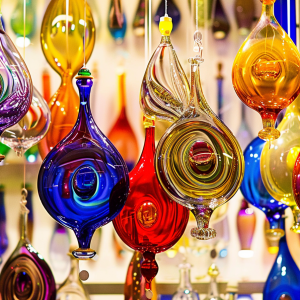
The history of Venetian glass dates back to 1291, when the Republic ordered the relocation of all furnaces from the island of Rialto to the island of Murano. Officially, this was due to the fire hazards posed by high-temperature furnaces, but it was also to protect the secrets of a craft that would make Venice famous across Europe. For centuries, Murano glass masters developed unique techniques—from filigree to cane glass, lampworking, and mouth-blowing—transmitted almost exclusively within furnace families.
Today, the most reliable way to recognize an authentic piece is to look for the “Vetro Artistico Murano” trademark. Managed by a trade association, it certifies the item’s origin and handmade production, often accompanied by a numbered label and a certificate of authenticity. A second concrete clue is the price: mouth-blown glass requires hours of expert labor, so an exceptionally low price—especially for large or intricately colored pieces—is almost always a sign of a factory-made imitation from elsewhere. The simplest way to clear any doubt, however, is to see the process in person: watching a demonstration in an actual furnace instantly reveals the difference between an object shaped by a master’s breath and a mass-molded one.
For those wishing to delve into the history before choosing what to buy, a stop at the Murano Glass Museum in the historic Palazzo Giustinian helps train a expert eye on genuine techniques. Spanning ancient Roman artifacts to Murano masterpieces from the 15th through 20th centuries, the visit highlights the difference between a work of glass art and a basic stall souvenir.
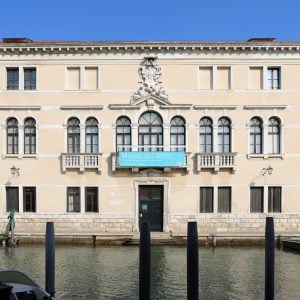
Murano Glass Museum Ticket
Where to Buy Authentic Murano Glass
In Murano, the most reliable furnaces are primarily located along Fondamenta dei Vetrai and its adjacent alleys. They are easily recognizable as they display the trademark logo and often allow visitors to view the workshop from the outside or through viewing windows. It is best to buy here rather than in crowded tourist shops around St. Mark’s Square or the Rialto Bridge, where displayed glass is frequently imported—even when shopfronts play on vague terms like “Venice” or “Murano style.”
Those seeking a direct experience—with the chance to speak to the master, understand the step-by-step process, and purchase a piece straight from the furnace—can book a private island tour. It is a great way to access an authentic setting without middleman shops and bring home a piece with guaranteed origin.
Burano Lace: The Ancient Weave
If Murano is the realm of fire and glass, Burano belongs to the needle and thread. Venetian lacemaking began in the 16th century within convents and noble homes, but the island took center stage in the 19th century thanks to the Lace School (Scuola dei Merletti), founded in 1872 by Countess Andriana Marcello to preserve an art form at risk of disappearing alongside the last lacemakers. Today, the Lace Museum—housed in the school’s historic building—preserves over two hundred specimens detailing the evolution of the technique from the 1500s to the 1900s.
Distinguishing real lace from an imitation can be harder at a glance than with glass, but key indicators remain reliable: genuine hand-stitched needle lace displays subtle irregularities in its weave and requires months of work for a single small piece—which is why the price is never nominal. Conversely, the perfectly uniform weaves and low prices found in many souvenir shops along main tourist paths almost always point to machine production, often made outside Italy. Once again, the best way to train your eye is to watch real lacemakers at work up close.
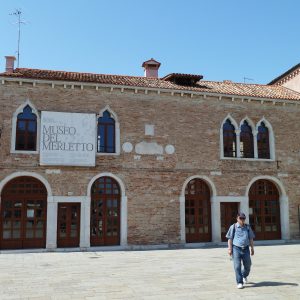
Burano Lace Museum Ticket
For visitors wanting to dedicate a day to both glass and lace, a combined ticket covers entry to both island museums in a single purchase, making it easy to discover both craft traditions without planning separate visits.
Ticket for Museums of the Venetian Islands: Murano and Burano
Venetian Masks: From Carnival to Papier-Mâché
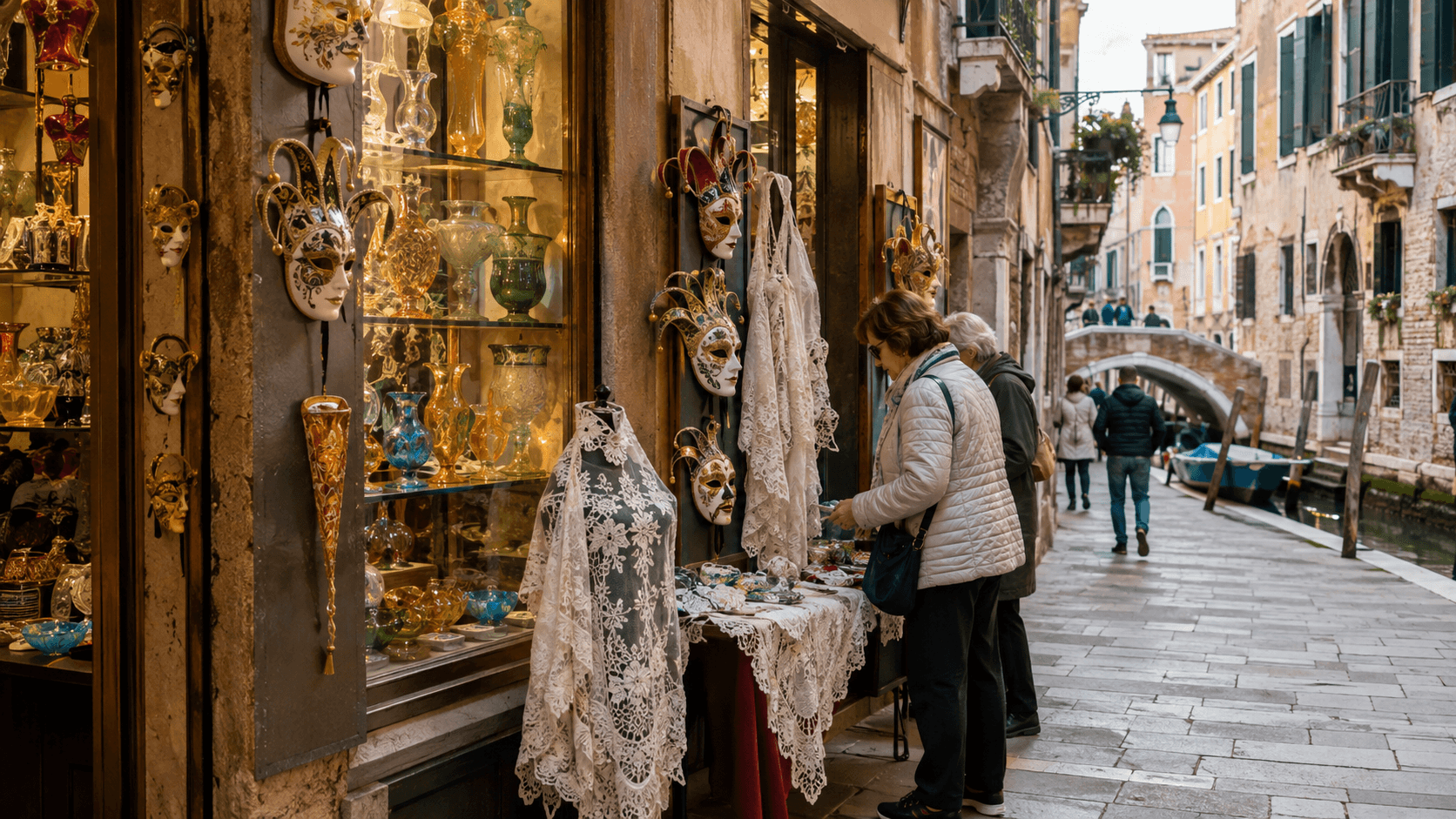
Masks are perhaps the most sought-after souvenir in Venice, but they are also the easiest to fake. The tradition stems from the Commedia dell’Arte and the Venetian Carnival, when masks allowed social boundaries to vanish for a few weeks each year: from the Bauta, which concealed both face and voice, to the silent Moretta worn by noblewomen, to Commedia figures like Harlequin and Pantalone, every shape tells a story.
Authentic masks are crafted from papier-mâché, molded over plaster casts, and hand-painted one by one. Hand-finished details, brushstrokes, and minor variations ensure no two pieces are identical. In contrast, pressed plastic or resin versions—recognizable by their overly uniform surfaces, light weight, and identical decorations across pieces—are mass-produced and have no connection to Venetian craftsmanship. As with glass and lace, seeing the process firsthand or trying your hand at a mask-decorating workshop is the best way to ensure authenticity.

Venice City Pass 48h
Practical Tips for Conscious Craft Shopping
Before buying glass, lace, or masks, keep these simple guidelines in mind to avoid common imitations:
- Beware of low prices: Unusually cheap items sold as handmade Murano glass, lace, or papier-mâché are almost always factory-made.
- Look for official marks: Check for the “Vetro Artistico Murano” trademark and, where applicable, a numbered certificate of authenticity for glass items.
- Ask the seller: Inquire directly about where and by whom the item was made; genuine artisans are happy to share details about their workshop.
- Seek visible workshops: Prefer shops with an attached or visible workspace where you can see artisans actively crafting.
- Check shipping options: For large or fragile glass items, verify insured shipping conditions before purchasing.
- Buy at the source: Purchasing directly during a guided tour of a furnace or artisan workshop is the safest way to guarantee provenance.
A Shopping Itinerary Across Murano, Burano, and the Historic Center
For a full-day trip, an efficient itinerary starts early in the morning on Murano. Spend a couple of hours visiting a furnace, watching a glassblowing demonstration, and browsing shops along Fondamenta dei Vetrai. Around midday, head to Burano—ideal for lunch among the brightly colored houses and a visit to the Lace Museum, followed by time spent searching for genuine needle lace in the island’s historic shops. In the late afternoon, head back to the historic center for a mask-decorating workshop near St. Mark’s Square to end the day with a handmade souvenir.
To travel smoothly between the islands and the city center without buying single water-bus tickets, a pass covering public transportation across Venice, Murano, and Burano makes day-long logistics much simpler.
Frequently Asked Questions About Shopping for Crafts in Venice
- How do I recognize real Murano glass? The most reliable indicators are the “Vetro Artistico Murano” trademark, a numbered certificate of authenticity, and a price that reflects hours of hand labor. Watching a live furnace demonstration is the easiest way to train your eye before buying.
- How much does authentic Murano glass cost? Prices vary widely based on size, complexity, and labor time, but a piece handmade by a master glassmaker will always cost significantly more than a mass-produced item. Extremely low prices almost always signal an imported copy.
- Is Burano lace still made by hand? Yes, a small number of lacemakers maintain the needle technique, and visitors can often observe them working at the Lace Museum. Authentic lace takes months to make and features slight weave irregularities, unlike cheap machine-made souvenir versions.
- Are all Venetian masks sold in shops authentic? No. Many masks sold in high-traffic tourist areas are mass-produced from plastic or resin. Authentic masks are made from papier-mâché, molded, and hand-painted individually, featuring small variations that make each piece unique.
- Is it better to buy directly from a furnace or workshop rather than city-center shops? Yes, whenever possible. Buying during a guided furnace tour on Murano or joining an artisan workshop ensures the item’s origin and often allows you to speak directly with the creator.
- When is the best time to shop for crafts in Venice without crowds? Early morning hours on both Murano and Burano allow for relaxed visits to furnaces and shops before tour groups arrive. Low-season months, such as November or February (outside the Carnival period), also offer a much quieter experience.