

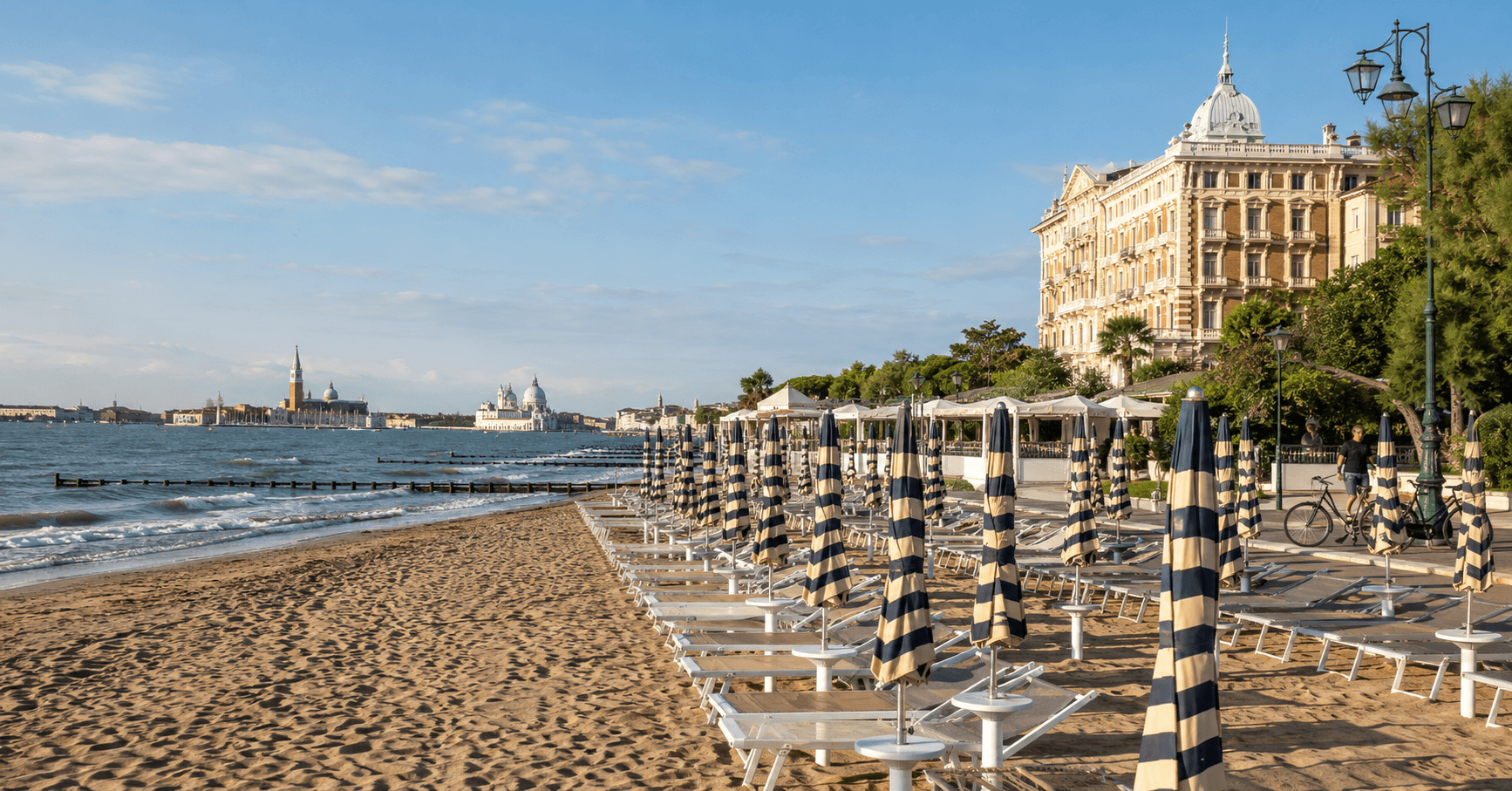
Where Is the Lido di Venezia and How to Get There
The Lido di Venezia is a thin barrier island approximately 11 kilometers long, separating the Venetian Lagoon from the Adriatic Sea. Unlike Venice’s historic center, you walk on real paved roads here, complete with cars, buses, and bike paths. Its layout resembles a seaside resort town rather than a lagoon city. Administratively part of the Municipality of Venice, it is connected to the historic center exclusively by water.
The easiest way to reach it is via the ACTV vaporetto: lines 1, 5.1, 5.2, and 6 connect San Zaccaria, St. Mark’s, and other points in the historic center to the Lido Santa Maria Elisabetta stop in about 10–20 minutes, depending on your departure point. From the stop, Gran Viale Santa Maria Elisabetta cuts straight across the island, leading directly to the sea in about a ten-minute walk.
Venice: ACTV Daily Vaporetto Pass
The History of the Lido: From 19th-Century Baths to Movie Set
For centuries, the Lido was little more than a strip of dunes and vegetable gardens protecting the lagoon from the open sea, with small fishing settlements concentrated mainly in Malamocco. Its transformation began in the 19th century when Europe discovered the trend of sea bathing and seaside holidays as both a healthy and fashionable practice. The island’s first bathing establishments and hotels sprang up to cater to an international clientele seeking sea air just steps from Venice.
The real leap in status occurred between the late 19th and early 20th centuries, when the Lido became one of Europe’s most elegant beach destinations. The Grand Hotel des Bains opened in 1900, followed in 1908 by the Hotel Excelsior, an imposing Moorish-Venetian style building that still dominates the seafront today. Surrounding these grand hotels, dozens of Liberty-style villas—the Italian counterpart to Art Nouveau—were built, defining the island’s urban landscape to this day. It was the Grand Hotel des Bains that inspired Thomas Mann’s novel Death in Venice, set on the Lido’s beaches and later adapted for the big screen by Luchino Visconti.
The island’s glamorous calling was cemented on August 6, 1932, when the terrace of the Hotel Excelsior hosted the screening of the very first film in the history of the Venice International Film Festival—the oldest film festival in the world, second only to the Oscars. Since then, the Lido has been more than just an elegant beach; it is an international stage for cinema, attracting stars, directors, and film enthusiasts from all over the globe every year.
The Beaches of the Lido di Venezia
The Lido’s coastline offers several kilometers of sandy beach—a striking contrast to the classic image of Venice on the water—divided into private beach clubs and stretches of free public beach.
- San Nicolò (The Most Popular Free Beach): Located on the northern tip near the church of the same name and the Nicelli airport, this is one of the most frequented free beaches on the Lido. It is ideal for visitors looking to enjoy the sea without paying an entry fee and is easily reached on foot or by bike from the vaporetto terminal.
- Historic Beach Clubs Along the Seafront: The central stretch, directly in front of the Hotel Excelsior and Grand Hotel des Bains, features the island’s most elegant, historic beach clubs. Complete with colorful beach huts (capanne), lined-up umbrellas, and a Belle Époque atmosphere, these private paid establishments offer the most iconic way to experience the Lido as its early resort-goers did.
- Alberoni (Dunes, Nature, and Tranquility): At the southern end of the island, Alberoni features a protected landscape of sand dunes, pine forests, and a historic golf course. It is the most natural, least urbanized area of the Lido—perfect for those seeking quieter beaches away from the central hub. It also serves as the departure point for the ferry to Pellestrina.
What to See on the Lido Beyond the Sea
- Palazzo del Cinema and the Festival Seafront: Inaugurated in 1937 on Lungomare Marconi, the Palazzo del Cinema is the historic venue for the International Film Festival. It houses the Sala Grande, the heart of official screenings and the famous red carpet. Even outside festival days, strolling past the building along the seafront lets you soak in the cinematic atmosphere that made the island world-famous.
- Hotel Excelsior and Art Nouveau Villas: The Hotel Excelsior remains one of the Lido’s most striking structures, with its Moorish-Venetian façade overlooking the beach. Walking down Gran Viale Santa Maria Elisabetta and adjacent side streets, you will pass dozens of early 20th-century Liberty villas featuring floral details, verandas, and private gardens that tell the story of Venice’s golden resort age.
- San Nicolò Church and Former Abbey: In the northern part of the island sits the complex of San Nicolò al Lido, historically a highly important Benedictine abbey. By tradition, Doges were crowned here, and Venetian fleets set sail from its shores into the Adriatic—a connection that gave birth to the Sposalizio del Mare (Marriage of the Sea) ceremony, still celebrated today during the Festa della Sensa.
- Malamocco (The Lagoon’s Ancient Capital): South of the Lido center lies the village of Malamocco, which preserves the layout of an authentic fishing village with a central square, narrow alleys, and low-rise homes—a stark contrast to the grand Liberty hotels along the coast. Before lagoon power shifted to Rialto, Malamocco served as the seat of government for centuries. Today, it is an ideal stop for those wanting to explore a quieter, less touristy side of the island, especially by bicycle.
The Venice Film Festival: The Lido Takes Center Stage in September
Every year between late August and early September, the Lido becomes the center of global media attention thanks to the Venice International Film Festival, attracting directors, actors, and journalists worldwide. For eleven days, the Palazzo del Cinema and the seafront come alive with screenings, red carpets, and photocalls, while local bars and restaurants hum with an exceptionally glamorous vibe.
If your trip doesn’t overlap with the festival, don’t worry: the Lido is delightful year-round. Outside the festival period, it is significantly quieter, with less crowded beaches and more affordable accommodation rates.
Venice Film Festival: history, the Golden Lion and how to experience the Festival on the lido
When to Visit the Lido di Venezia
- Beach Season (June to September): July and August mark peak summer season when beach establishments are fully operational and the weather is ideal for a day by the water.
- Film Festival (Late August to Early September): Essential for those wanting to experience the energy of the event, though expect high crowds, busy transport, and peak accommodation rates.
- Sightseeing & Cycling (Spring and Early Autumn): Ideal for peacefully admiring the Liberty villas, exploring Malamocco, or cycling to Alberoni without the crowds, accompanied by pleasant weather and outdoor dining opportunities along the coast.
Getting Around the Island: On Foot, Bike, or Bus
Unlike the rest of Venice, you can travel by bicycle and car on the Lido. Bicycles are the most popular mode of transport for visitors: several rental shops are located near the Santa Maria Elisabetta terminal, and dedicated bike paths easily link the center to the beaches, San Nicolò, Malamocco, and all the way to Alberoni.
Alternatively, ACTV bus routes (lines A, B, C, and V) connect the entire island to the Lido Santa Maria Elisabetta terminal, which is especially convenient for reaching distant spots like Alberoni without riding long distances. If you hold a Venice City Pass, public transport to and within the Lido is already included in your ticket.
Venice City Pass all Inclusive 72h
Frequently Asked Questions About the Lido di Venezia
- How do I get to the Lido from St. Mark’s Square? Take the ACTV vaporetto (lines 1, 5.1, 5.2, or 6) from San Zaccaria or nearby stops in the historic center. The ride to Lido Santa Maria Elisabetta takes 10 to 20 minutes depending on the line.
- Are the beaches on the Lido free? Both options exist. There are free public beaches (such as the one near San Nicolò) and paid beach clubs along the central seafront offering huts, umbrellas, and amenities.
- How much time do I need to visit the Lido? A half-day is enough for a quick visit taking in the beach, Palazzo del Cinema, and Art Nouveau villas. If you plan to cycle down to Malamocco or Alberoni, plan for a full day.
- When does the Venice Film Festival take place? It takes place annually between late August and the first week of September, centered primarily around the Palazzo del Cinema on Lungomare Marconi.
- Is it worth staying on the Lido instead of central Venice? It depends on your travel style. The Lido often offers cheaper hotel rates and a more relaxed environment, but you will always need to take a vaporetto ride to reach St. Mark’s Square and central attractions.
- Can you rent bicycles on the Lido? Yes, it is one of the few areas in the lagoon where cycling is permitted. Multiple rental shops are situated right near the Santa Maria Elisabetta boat stop.