

What to eat in Venice in January: typical dishes, traditions and gastronomic guide for tourists
- 7 min read
Visiting Venice in January offers a different point of view on the city, because the pace slows down but the local identity becomes more evident. Due to the colder temperatures and the lower presence of tourists, the gastronomic experience takes on an even deeper value. In summary, understanding what to eat in Venice in January allows you to come into contact with a cuisine born from necessity, seasonality, and an ancient bond with the lagoon. During the winter, eating in Venice is not just a daily act but becomes a narrative, because every dish speaks of work, adaptation, and traditions passed down over time.
Venice City Pass all Inclusive 72h
Typical Venetian first courses to eat in January
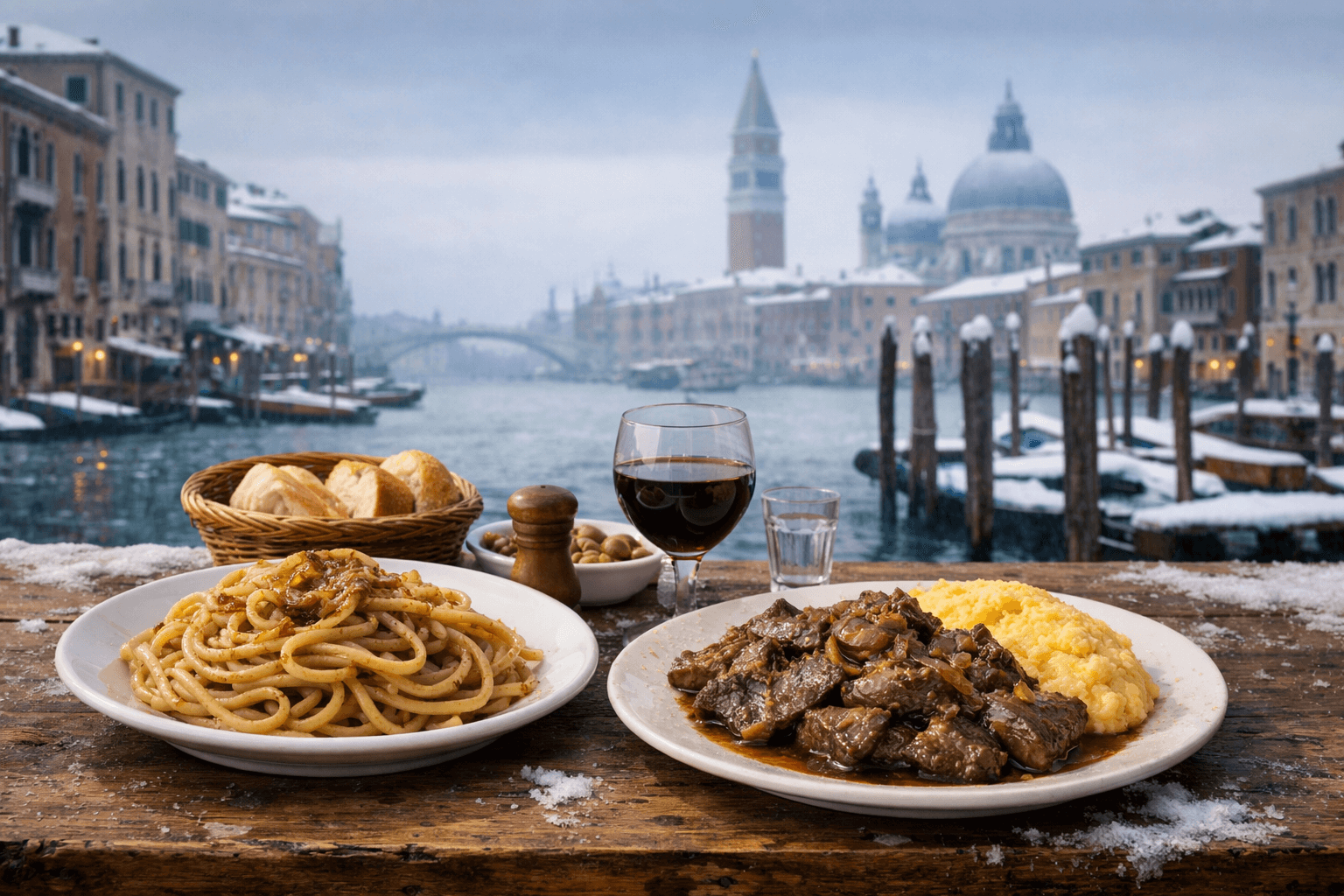
When talking about what to eat in Venice in January, first courses represent one of the pillars of winter tradition, because they offer warmth and substance without being excessively elaborate. Due to the cold, thick pastas, rices, and soups are preferred, capable of warming the body and accompanying the more humid days. Bigoli in salsa are one of the most emblematic dishes, because they are born from simple ingredients like onions and anchovies, but the final result is intense and deep. This dish tells of a popular Venice, made of hearty and shared meals. Due to the long cooking of the onions, the flavor becomes sweet and enveloping, perfect for the winter period.
Alongside bigoli, risi e bisi occupies a special place, because it represents the balance between soup and risotto. Even if it is consumed at different times of the year, in January it is particularly appreciated due to its creamy consistency. In summary, these first courses allow you to concretely understand what to eat in Venice in January without forcing or tourist adaptations.
Winter second courses of Venetian cuisine
Second courses take on a central role in winter Venetian cuisine, because they respond to the need for energy and nourishment. Due to the cold climate, preparations become richer, but they maintain a simple and recognizable structure. Fegato alla veneziana (Venetian-style liver) is one of the most representative dishes of the period, because it combines proteins and fats in a balanced way. The onions, cooked slowly, play a fundamental role, because they make the dish softer and more digestible. Due to these characteristics, fegato alla veneziana is often considered a concrete answer to the question of what to eat in Venice in January.
Another protagonist is baccalà mantecato, consumed all year round but particularly appreciated in the cold months. Its creamy consistency and delicate flavor make it ideal in January, because it adapts to both full meals and lighter tastings. In summary, winter Venetian second courses tell of a cuisine that privileges substance over appearance.
Fish and lagoon: what changes in January
Venetian cuisine is indissolubly linked to the lagoon, but in January the availability of fish changes due to climatic conditions. Not all species are easily available, and this has historically influenced the birth of specific recipes for the winter period. In this context, what to eat in Venice in January also means accepting a more selective cuisine, based on what the lagoon offers at that moment. Preparations become simpler, because the goal is to enhance the ingredient without waste. In summary, winter Venetian fish is not abundant but is deeply identity-forming.
Soups, minestre and hot dishes of the lagoon tradition
Soups represent one of the most authentic elements of winter Venetian cuisine, because they are born from the need to warm up and nourish oneself. Due to the damp cold typical of January, these dishes become central to the daily diet. Fish soups, legumes, and seasonal vegetables are prepared with few ingredients, but they require long cooking times. In summary, these preparations tell of a patient and respectful cuisine, perfectly consistent with the idea of what to eat in Venice in January.
Venice City Pass all Inclusive 72h
Winter side dishes and accompaniments
Side dishes also follow seasonality, because in January mainly cooked vegetables are consumed. Due to the climate, raw vegetables are less present, but not for this reason less important. Polenta often accompanies second courses, because it represents a simple and accessible source of energy. In summary, side dishes complete the meal in a way that is consistent with tradition and help to better understand what to eat in Venice in January.
Typical Venetian desserts of the month of January
Winter Venetian desserts reflect a sober tradition, because they are born from poor and easily available ingredients. Due to these origins, the preparations are simple but nutritious. Pinza veneziana is one of the most representative desserts of the period, because it combines cornmeal, dried fruit, and sugar in a rustic preparation. However, there are also dry biscuits and baked sweets designed to accompany hot drinks. In summary, even pastry contributes to defining what to eat in Venice in January.
What to drink in Venice in January
During the winter, drinks take on a complementary but important role. Due to the cold, hot drinks and local wines are privileged, but the tradition of the “ombra di vino” (a small glass of wine) remains alive. In summary, drinking in Venice in January is an integral part of the gastronomic experience and naturally accompanies the discovery of what to eat in Venice in January.
Winter gastronomic itinerary for tourists
January is an ideal month to follow a gastronomic itinerary, because the city is less crowded but the offer remains authentic. Due to the lower tourist pressure, it is easier to come into contact with real local cuisine. In summary, building a gastronomic path allows you to understand what to eat in Venice in January in a gradual way that is consistent with the pace of the city.
Practical tips for eating well in Venice in January
Eating well in Venice in winter requires attention, because not all places offer seasonal cuisine. However, informing oneself and observing the menus of the day can make a difference. Due to seasonality, many dishes are not always available. In summary, flexibility and curiosity are fundamental to fully experiencing what to eat in Venice in January.
Venice City Pass all Inclusive 72h
FAQ – Frequently Asked Questions
- What is the most typical dish to eat in Venice in January?
Fegato alla veneziana is one of the most representative dishes, because it is linked to the winter tradition. - Is it easy to find typical Venetian cuisine in January?
Yes, because many places offer seasonal menus, but it is advisable to avoid the most touristy areas. - What to eat in Venice in January to warm up?
Soups, hot first courses, and substantial second courses are ideal due to the climate. - Do desserts change based on the season?
Yes, because desserts like pinza veneziana are typical of winter. - Is January a good period for a gastronomic itinerary?
Yes, because the city is quieter but the offer remains authentic. - Do I need to book restaurants in January?
Generally no, due to the lower turnout, but in the most famous places it can be useful.