

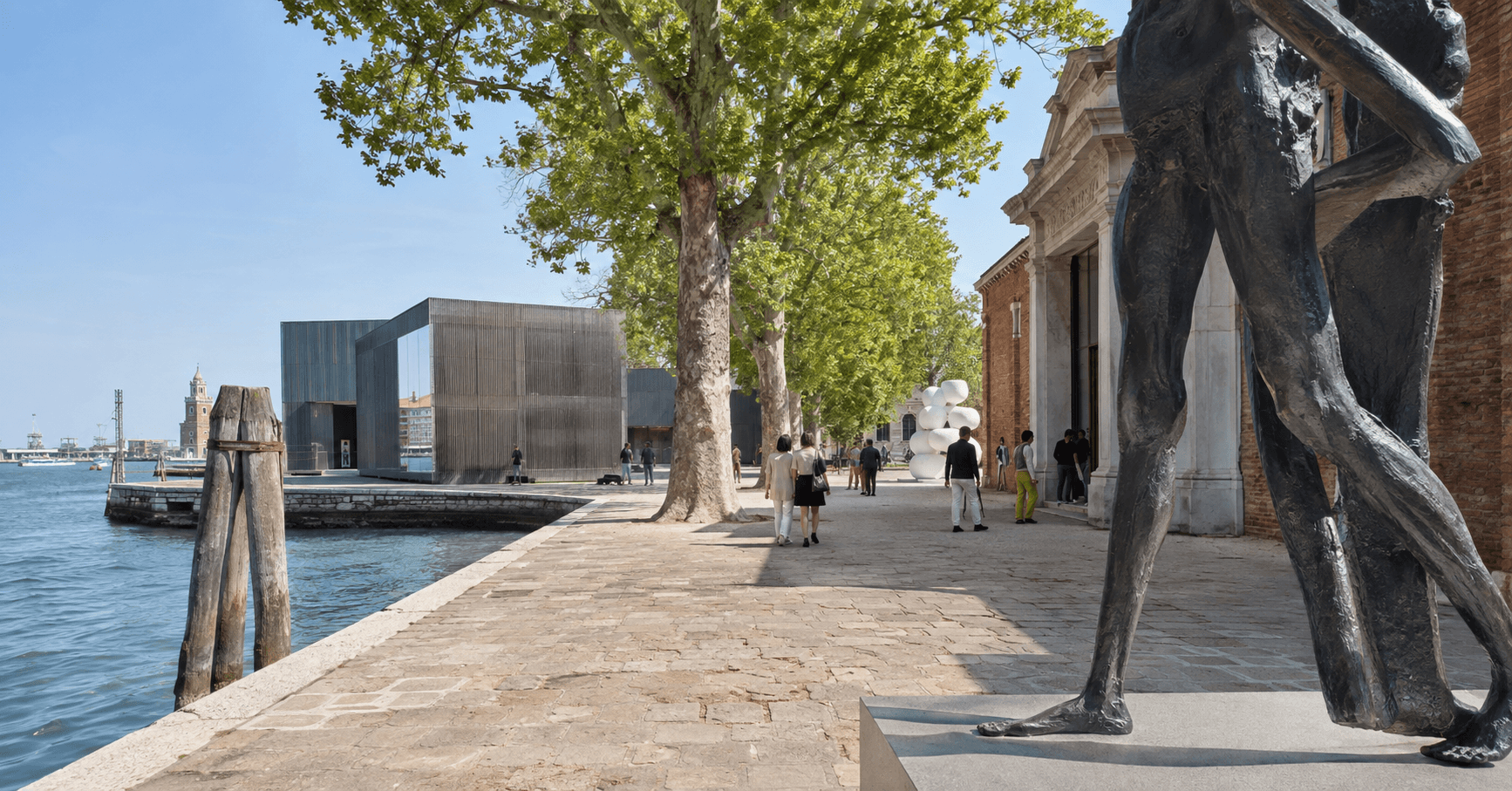
First-time visitors often face the same questions: When does it take place? How much are tickets? How long does it take to see properly, and how should you plan your day to avoid burnout? Here is everything you need to know before you leave—from venues and tickets to practical tips for a seamless visit.
What is the Venice Biennale?
Founded in 1895 as the International Art Exhibition, the Venice Biennale has grown into one of the world’s most influential cultural institutions over the last century. Today, the name “Biennale” refers to a broader umbrella organization encompassing six distinct disciplines: Art, Architecture, Cinema (the famous Venice International Film Festival held on the Lido), Dance, Music, and Theater.
While each discipline follows its own schedule, the Art and Architecture exhibitions occupy the historic Giardini and Arsenale venues, alternating yearly and remaining open to the public for several months from May to November.
Each edition of the International Art Exhibition and International Architecture Exhibition is curated by a different curator who selects an overarching theme. This central vision, paired with the creative freedom of each participating country, ensures every edition is a completely new experience—even when returning to the exact same physical spaces.
Main Venues: Giardini and Arsenale
A visit to the Biennale spans two complementary venues, both covered by a single ticket and visitable on separate days:
- The Giardini: Located in the Castello district, the Giardini is the historic venue. It hosts 29 permanent national pavilions built from the early 20th century onward, many designed by renowned architects such as Alvar Aalto (Finland), Carlo Scarpa (Venezuela), Gerrit Rietveld (Netherlands), and Josef Hoffmann (Austria). Walking through the Giardini allows you to experience nearly a century of exhibition architecture alongside the artworks themselves.
- The Arsenale: A unique site of industrial archaeology, the Arsenale is where the naval fleet of the Venetian Republic was built starting in the 14th century. The sprawling Corderie (rope works) and Gaggiandre areas have been converted into monumental exhibition galleries, ideal for large-scale installations that would not fit in the Giardini.
Tip: The Giardini and Arsenale are about a 10-minute walk apart, but many visitors prefer dedicating a half-day to each to avoid rushing.
The Current Edition: Dates and News
The 61st International Art Exhibition, titled “In Minor Keys” and curated by Koyo Kouoh, is open to the public from May 9 to November 22, 2026. It spans the Giardini, the Arsenale, various locations throughout Venice’s historic center, and—for the first time—Forte Marghera on the mainland. Both main venues are open daily except Mondays (excluding select extraordinary holiday openings).
Note: Art and Architecture exhibitions never take place simultaneously. They alternate yearly. During off-years for either main exhibition, the venues still host other Biennale events (Dance, Theater, Cinema). Always double-check the official website to confirm which exhibition is running during your travel dates.
Venice City Pass all Inclusive 72h
Tickets: Prices and How to Buy
A standard Biennale ticket grants one entry to the Giardini and one entry to the Arsenale, which can be used on different, non-consecutive days.
- Full Price: €30
- Reduced Price (Ages 65+ & Venice Municipality Residents): €20 (ID required)
- University & High School Groups: €15 and €10 per person (minimum 10 participants, online purchase only)
- Guided Tours: Additional €10 per venue (fixed-time departures, advance booking mandatory, entrance ticket not included)
Online purchasing is strongly recommended. While tickets are sold on-site at the Giardini and Arsenale infopoints, availability can be limited during peak times, particularly summer weekends. Tickets can be bought on the official Venice Biennale website.
Getting There & Opening Hours
Both sites are easily accessible by ACTV water bus (vaporetto) from Piazzale Roma or the Santa Lucia train station:
- To the Arsenale (Arsenale stop): Lines 1 and 4.1
- To the Giardini (Giardini Biennale stop): Lines 1, 4.1, 5.1, and Line 6 (from Piazzale Roma)
- From Lido or Punta Sabbioni: Line 14 to San Zaccaria, then transfer to the main lines.
Operating Hours:
- Summer Hours (May – late September): 11:00 AM – 7:00 PM (Last entry at 6:45 PM).
- Autumn Hours (Late season): 10:00 AM – 6:00 PM (Last entry at 5:45 PM).
- Extended Hours: The Arsenale venue occasionally stays open until 8:00 PM on Fridays and Saturdays during select periods.
- Weekly Closure: Mondays (except select public holidays).
Venice: ACTV Daily Vaporetto Pass
How Much Time Do You Need?
Fully exploring both venues takes roughly 5 to 6 hours in total. You can tackle this in one intense day with a lunch break in between, or split it across two half-days using your multi-entry ticket. If traveling with children or preferring a relaxed pace, budgeting two days is ideal.
Practical Tips:
- Footwear: Comfortable shoes are essential. You will walk extensively over uneven stone pavements, especially at the Arsenale.
- Water: Bring a refillable water bottle during summer months.
- Clothing: The Arsenale’s historic brick structures can feel quite cool in the autumn, even on mild days—dress in layers.
Practical Tips Before You Go

Venice: hidden and unusual walking Tour
Beyond the Exhibition: Exploring Castello and the Arsenale
The surrounding neighborhood offers a look at a more authentic, quiet side of Venice:
- Via Garibaldi: A wide pedestrian street created by filling in a canal, filled with local markets and traditional bàcari (wine bars) frequented by locals.
- Sant’Elena Gardens: A green park further east, perfect for resting after hours of walking.
- Arsenale Exterior: Take time to admire the crenellated walls and historic stone lions guarding the main entrance gate.
Frequently Asked Questions
- When does the 2026 Venice Biennale take place?
The 61st International Art Exhibition (“In Minor Keys”) runs from May 9 to November 22, 2026 across the Giardini, Arsenale, central Venice locations, and Forte Marghera. - What is the difference between Biennale Art and Biennale Architecture?
They are two distinct exhibitions held in alternate years, each with its own curator and theme. Biennale Art focuses on contemporary visual arts, while Biennale Architecture focuses on architectural and urban design. They share the same venues but never occur simultaneously. - How much is a Biennale ticket?
A full-price ticket costs €30 and includes one entry each to the Giardini and Arsenale (valid on non-consecutive days). Reduced tickets for seniors (65+) and Venice residents cost €20. Discounts are available for school and university groups. - How long does it take to visit the Giardini and Arsenale?
Plan for 5 to 6 hours total. Splitting the visit over two separate half-days is recommended. - Do I need to book in advance?
It is not mandatory, but buying tickets online is highly recommended to avoid long queues or sold-out time slots on busy weekends. - How do I get to the Giardini and Arsenale?
Take ACTV water buses from Piazzale Roma or Santa Lucia station: Lines 1 or 4.1 for the Arsenale; Lines 1, 4.1, 5.1, or 6 for the Giardini.
You might also be interested in: