

Why Venice Is so Rich in Legends
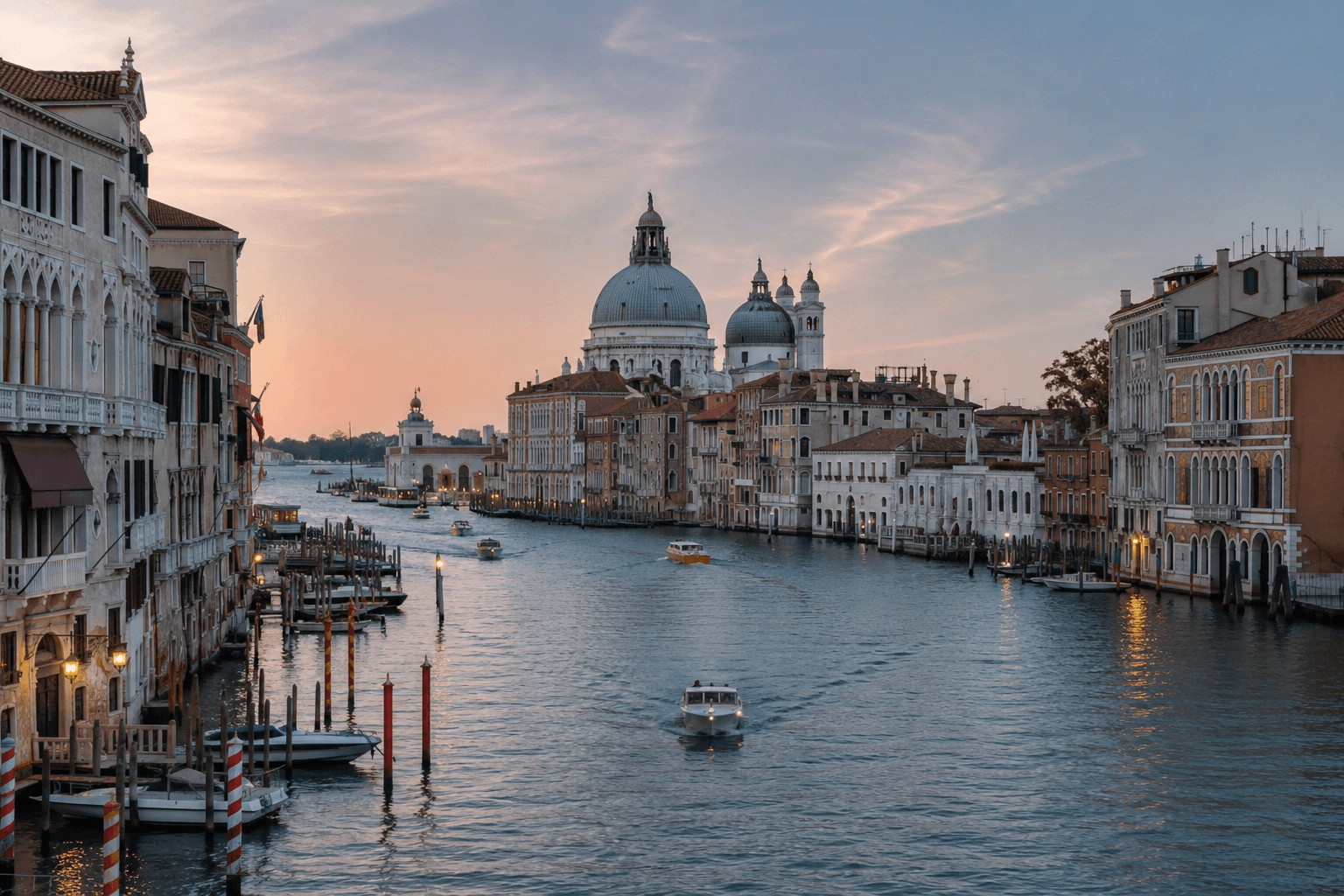
Understanding why Venice generated so many ghost stories, curses, and mysteries starts with its history. For over a thousand years, the Serenissima was a powerful maritime republic—a crossroads of goods, cultures, and secrets from across the Mediterranean and the Orient. This city-state needed total control over trade, politics, and even the thoughts of its citizens. This widespread oversight, enforced through severe magistracies like the Council of Ten and the State Inquisitors, gave rise to many of the darker tales still whispered in the alleys today.
Added to this is the layout of the city itself: a labyrinth of narrow alleys, hidden squares (campielli), and winding canals where it is easy to get lost and let the imagination wander. Venice has always been an endless source of stories—some based on documented history, others born from local superstition, and others sparked by the literary imagination of visiting writers over the centuries.
The Bridge of Sighs: The Last Glimpse of Freedom
No place captures Venice’s dark allure quite like the Bridge of Sighs (Ponte dei Sospiri), the small white-stone bridge spanning the Rio di Palazzo to connect the Doge’s Palace to the New Prisons. According to popular tradition, its name comes from the sighs of the condemned who, crossing it on their way to their cells, caught a final glimpse of the lagoon and freedom through its small, stone-grated windows.
In reality, the bridge was built in the early 17th century when the Republic had largely abandoned its harshest capital punishments. Most prisoners crossing it were serving relatively short sentences for minor offenses or debts. However, the name—immortalized by Lord Byron in Childe Harold’s Pilgrimage—endured. It was further sustained by a romantic legend: it is said that lovers who kiss in a gondola directly beneath the bridge at sunset while the bells toll will be granted eternal love.
Crossing the Bridge of Sighs today means retracing the path connecting the Republic’s power to its sternest face: the prisons. Admission to the Doge’s Palace includes passage across the bridge and a visit to the historical cells.
Doge's Palace Reserved Entry Ticket
The Prisons of the Doge’s Palace and Casanova’s Legendary Escape
Past the Bridge of Sighs lie the New Prisons, but the most evocative section sits directly under the roof of the Doge’s Palace: the Piombi (Leads). These cells, lined with lead plates, grew scorching hot in summer and freezing cold in winter to break a prisoner’s resolve. It was from here in 1756 that Giacomo Casanova pulled off one of history’s most famous jailbreaks. After months of imprisonment, he used a makeshift tool to break through the ceiling, traversed the palace roofs, lowered himself down the cornices, reached a canal, and fled the city. Casanova detailed the escape in his memoirs, cementing his place in Venetian lore.
By contrast, the lower cells—the Pozzi (Wells)—were damp, dark, and carved out almost at water level, reserved for severe crimes. Another compelling historical site nearby is the Palace of the Signori della Notte, the ancient magistracy tasked with maintaining order after dark, featuring secret cells and a torture room only recently opened to the public.
Venice: Guided Tour of the Palace and Prisons of the Lords of the Night
The Lion’s Mouth: When Walls Accused
Set into walls near the Doge’s Palace and in various historic entryways are stone carvings of roaring lions with open slots: the famous Bocche di Leone (Lion’s Mouths), or complaint boxes. Citizens used these slots to drop anonymous written accusations against those suspected of crimes against the State, ranging from tax evasion to treason or personal disputes framed as political offenses. Collected by the State Inquisitors, credible complaints triggered secret investigations, contributing to Venice’s historic image as a closely monitored state where walls had ears.
The best-preserved Bocca di Leone rests in the Square Atrium (Atrio Quadrato) of the Doge’s Palace along the route to the Great Council chambers and prisons.
The Columns of San Marco and San Todaro: The Spot Locals Still Avoid
Arriving in Venice by sea brings visitors face-to-face with two granite columns in Piazzetta San Marco, topped by the Winged Lion of St. Mark and the statue of St. Todaro (Venice’s original patron saint). Few realize that the space between these columns served for centuries as the Republic’s public execution site. Doge Marino Falier was among those executed here, beheaded in 1355 for plotting against the State.
This history birthed a superstition still observed by traditional Venetians: walking between the two columns brings bad luck. Many locals walk around them to avoid passing directly through the middle.
Why Gondolas Are Black: Laws vs. Legend
While the gondola’s black color is famous worldwide, its origins carry both a historical and a legendary explanation:
- Sumptuary Laws (Historical): In the 16th century, noble families used gondolas as status symbols, decorating them with gold carvings and rich velvets. To curb this competitive display of luxury, the Venetian Senate issued a decree in 1562 requiring all private gondolas to be painted uniform black.
- The Plague (Legendary): A darker tradition connects the color to the devastating plague outbreaks of the 17th century (notably 1630–1631), claiming black was chosen as a sign of citywide mourning to silently transport victims along the canals.
Poveglia: The Lagoon’s Uninhabited Island
Located between the Lido and Malamocco, the uninhabited island of Poveglia served in medieval times as a quarantine station for ships. During the plague epidemics of the 17th and 18th centuries, it operated as a lazaretto where terminal patients were isolated and mass graves were used.
In the 20th century, Poveglia housed a psychiatric hospital that closed in the 1960s, giving rise to local ghost stories and tales of paranormal activity. Today, the island is abandoned and closed to the public, though it remains visible from the water during boat tours in the southern lagoon.
The Devil’s Bridge and Attila’s Throne in Torcello
In Torcello, the oldest settled island in the lagoon, sits an ancient stone seat in front of the Basilica of Santa Maria Assunta. Popular tradition calls it Attila’s Throne, claiming the Hun leader sat there to dispense justice, though historians identify it as an ancient bishop’s or magistrate’s chair.
Nearby spans the Ponte del Diavolo (Devil’s Bridge), an arch bridge lacking parapets. Legend says it was built in a single night by the devil for a young Venetian woman in exchange for a soul, and that a black cat—the devil in disguise—appears on the bridge during full moons to collect his due.

Private Gondola Ride in Venice (Max 5 Guests)
Ca’ Dario: The Cursed Palace on the Grand Canal
Distinguished by its Renaissance facade decorated with marble inlays, Palazzo Dario (Ca’ Dario) on the Grand Canal carries a reputation for misfortune. Built in the late 15th century for Giovanni Dario, secretary to the Venetian Senate, local lore claims the building brought financial ruin, untimely deaths, or ill fortune to a succession of owners over the centuries. Despite the dark folklore, it remains a notable example of Venetian Renaissance architecture, easily viewed from the Grand Canal via gondola or vaporetto.
Alleys, Squares, and Hidden Details
Beyond major landmarks, smaller mysteries are scattered throughout Venice:
- Rio Terà dei Assassini: Located near Campo Sant’Angelo, this alley earned its name in medieval times as an unlit area prone to ambushes.
- San Marco Campanile: The bell tower standing today is a 20th-century reconstruction; the original structure collapsed unexpectedly on July 14, 1902, without causing casualties, and was rebuilt “dov’era e com’era” (“where it was and how it was”).
- Squero di San Trovaso: One of the last remaining historic boatyards where gondolas are built and repaired by hand, keeping traditional woodworking techniques and local lore alive across generations.
Unusual walking tour of Venice + priority entry to the Campanile of St. Mark
Frequently Asked Questions
- What is Venice’s most famous legend? The Bridge of Sighs is the most widely known, tied to both the historic path of prisoners to their cells and the popular romantic belief that kissing beneath it at sunset brings eternal love.
- Is Poveglia Island open to visitors? No. Poveglia is uninhabited and public access is restricted, though it can be viewed from the water via boat excursions in the southern lagoon.
- Why are Venetian gondolas painted black? The historical cause was a 1562 Senate decree banning lavish decorations on private boats to curb displays of wealth among nobles. Local folklore also associates the color with mourning during plague epidemics.
- Where can you see a Lion’s Mouth (Bocca di Leone)? The best-preserved example is located in the Square Atrium (Atrio Quadrato) of the Doge’s Palace along the tour route leading toward the prisons.
- Why do locals avoid walking between the Piazzetta San Marco columns? The space between the columns of St. Mark and St. Todaro was the site of public executions for centuries, giving rise to a longstanding local superstition that walking between them brings bad luck.
- What is the best way to explore these sites? A practical approach combines a tour of the Doge’s Palace and Bridge of Sighs with a walking route through less-traveled neighborhoods (sestieri), alongside a boat trip out to lagoon islands like Torcello.