

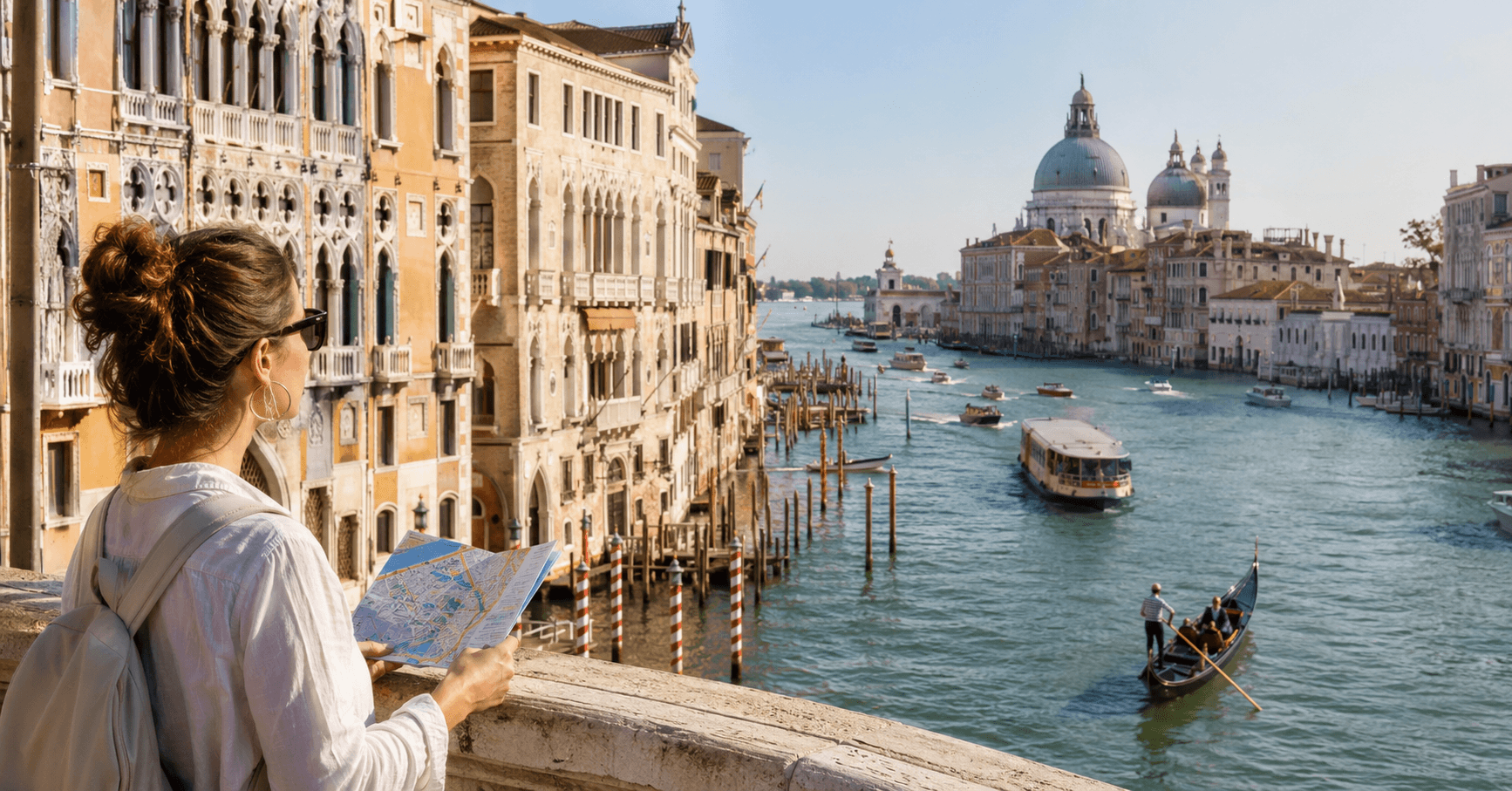
Spring in Venice (March–May): blooming gardens and moderate crowds
Spring is traditionally considered one of the most balanced times to visit Venice. Temperatures hover between 15°C and 20°C (59°F–68°F), with days that are often sunny but also a few sudden rain showers to account for: carrying a light umbrella is always a good idea. The city’s gardens, from the Biennale Gardens to the more hidden ones in Cannaregio, begin to bloom, offering photographic views that cannot be found at other times of the year. The soft light of these months is particularly loved by photographers and those who wish to stroll leisurely along the calli (streets), taking advantage of a moderate tourist influx compared to summer peaks.
Watch out for the Easter period: in the weeks leading up to and following the Easter holidays, tourist flows rise significantly, approaching high-season levels, with a consequent increase in hotel prices and bookings. If your goal is tranquility, it is better to aim for late March or the second half of May, avoiding the two weeks around Easter. For those who love soaking up a festive atmosphere, Easter spring still offers a lively city that is not yet as overcrowded as July and August. In any case, to move easily between the islands and the historic center, an ACTV transport pass for water buses (vaporetti) and buses remains the most practical and economical option.
For those traveling in spring, the advice is to book tickets for the main museums at least four weeks in advance, especially if your stay falls close to Easter or the long weekend holidays in April and May. A wider booking window also allows you to choose less crowded time slots for entry to the Doge’s Palace or St. Mark’s Basilica, optimizing your sightseeing time. Spring remains the ideal season for those looking for the perfect compromise between pleasant weather, vibrant colors, and a still sustainable city pace.
Tip: Not sure what to wear in Venice in Spring? Read our dedicated article!
Summer in Venice (June–August): warm weather, festivities and peak attendance
Summer is the time of year with the highest number of daylight hours and the warmest temperatures, generally ranging between 28°C and 32°C (82°F–90°F), with peaks of mugginess due to the humidity of the Lagoon. It is also the season when the risk of acqua alta is at its lowest, given that the phenomenon is typically linked to autumn and winter months. Those who love the sea can take advantage of the proximity of the Lido di Venice, with its equipped beaches, to alternate days of sightseeing in the city with moments of beach relaxation—a combination that makes summer particularly suitable for families with school-aged children, thanks to the school holidays.
The downside is the crowding: in the months of June, July, and August, Venice reaches its peak tourist numbers of the year, with lines in front of the most famous attractions that can exceed a 25-minute wait, narrow calli literally saturated with people during the central hours of the day, and accommodation prices rising by up to 50% compared to the low season. In this scenario, skip-the-line tickets stop being a luxury and become almost indispensable to avoid losing precious hours waiting in line under the sun.
For a summer stay, the golden rule is to book at least four weeks in advance, both for accommodation and entry tickets to the main monuments, as July and August often sell out well ahead of time. If budget and crowd tolerance allow, summer remains the most vibrant season: outdoor events, aperitivi in the campi (squares), and the long evening light make walks along the Grand Canal particularly evocative, especially aboard a gondola in the hours before sunset.
Tip: Not sure what to wear in Venice in Summer? Read our dedicated article!
Venice City Pass all Inclusive 72h
Autumn in Venice (September–November): the season for photographers and budget travelers
September marks the beginning of a gradual drop in temperatures, which settle between 12°C and 22°C (54°F–72°F), a range considered almost perfect for walking all day without suffering from either heat or cold. The autumn light, often referred to as “golden Venetian light,” gives photographers ideal conditions, especially in the early hours of the morning and at sunset, when reflections on the water of the Lagoon take on warm and unique hues. Compared to summer, crowds thin out noticeably starting in mid-September, and hotel and flight prices drop, making autumn one of the favorite seasons for budget-conscious travelers.
However, an increase in rainfall must be taken into account—with September still maintaining a mild but more unstable climate—and above all, the beginning of the acqua alta phenomenon starting from October, which intensifies in the following months. For those visiting the city during this period, a 24-hour or 48-hour Venice City Pass allows you to organize your visit to the main museums and the Doge’s Palace with flexibility, avoiding prolonged lines and optimizing the days available even in the event of sudden rain.
Autumn is also the ideal period for those wishing to combine a cultural visit with a craft workshop, such as a glassmaking lesson in Murano—an experience that in the low season takes place in smaller groups and with more direct contact with the master glassmaker. To best organize your autumn stay, we recommend booking the main tickets four to six weeks in advance, a sufficient margin to secure your preferred times without having to chase after the last available spots.
Tip: Not sure what to wear in Venice in Autumn? Read our dedicated article!
Winter in Venice (December–February): silence, low prices and the Carnival
The Venetian winter is the coldest season, with temperatures between 5°C and 10°C (41°F–50°F) and shorter daylight hours, but it is also the period when the city reveals its most authentic and least touristy face. Outside the weeks of Carnival, visitor numbers touch the lowest lows of the year: the calli empty out, the campi return to being spaces of daily life, and the prices of accommodation and services reach their most affordable levels of the twelve months. It is the perfect time for those looking for an intimate, almost melancholy atmosphere made of light mists over the canals and warm lights reflecting on the water in the early hours of the evening.
The downside concerns the weather: between December and January, acqua alta occurs with greater frequency, some local businesses and minor attractions close for the winter break, and daylight hours are significantly reduced. However, the real phenomenon that transforms this season is the Venice Carnival, concentrated in February, which turns the city for two weeks into a stage for costumes, masks, and events in St. Mark’s Square, drawing visitors from all over the world and causing both prices and accommodation occupancy rates to skyrocket.
Those who choose winter for a trip to Venice should carefully distinguish between two opposite strategies: book well in advance, even twelve weeks ahead, if the goal is to experience the Carnival during its peak weekend; or take advantage of the lowest rates of the year by choosing the weeks of January or early December, away from the holidays, for a relaxed and low-cost stay. In both cases, a gondola ride through the almost deserted canals of winter offers an atmosphere that is simply impossible to find during the high season.
Tip: Not sure what to wear in Venice in Winter? Read our dedicated article!
Venice City Pass all Inclusive 72h
Acqua alta in Venice: what to know before you go
Acqua alta is a natural phenomenon linked to the tides of the Lagoon, typical mainly of the period between October and April, with the highest frequency recorded between November and January. Contrary to what many travelers fear, it is not a dangerous event, but rather a temporary rise in the water level that generally does not exceed a few centimeters—enough to wet the lowest calli of the city, particularly around St. Mark’s Square. In the vast majority of cases, the phenomenon lasts a few hours and ends with the change of tide, without compromising the visit in any way, except for the need for alternative routes or temporary walkways in some areas.
To deal with acqua alta without stress, a few precautions are enough: check the tide forecasts published by the City of Venice in the days preceding your visit, bring waterproof footwear if your stay falls between November and January, and find out about the routes of the walkways that the municipality installs in the areas most subject to flooding. Even in rare cases of more pronounced high tides, museums and main attractions generally remain accessible, and city life continues with its usual industriousness: for Venetians, it is an event they have lived with for centuries, not an emergency.
Calendar of Main Events in Venice
- Carnival (February): The most famous event of the year, with costumes, masks, and events in St. Mark’s Square. Prices skyrocket and bookings sell out far in advance.
- Art Biennale (May-June, alternate years): An international contemporary art appointment that enlivens museums, palaces, and pavilions throughout the city.
- Venice Film Festival (September): The famous film festival brings international stars and a unique glamorous atmosphere to the Lido.
- New Year’s Eve in Venice (December 31): A large public celebration in St. Mark’s Square, with fireworks over the St. Mark’s Basin.
Which period to choose based on your travel profile
There is no single answer to the question of when to visit Venice: the best choice depends primarily on who you are as a traveler and what you are looking for on this trip. Below is a quick guide designed for the most common profiles, useful for navigating the seasons described in this article and choosing the dates best suited to your priorities, whether it’s saving money, experiencing a special event like Carnival, or simply enjoying the city with the fewest crowds possible.
- First time in Venice? Choose spring or autumn: pleasant weather, manageable crowds, and the chance to calmly see all the city’s iconic landmarks.
- Traveling on a budget? Aim for November or January, when accommodation and flight prices hit seasonal lows, though you must factor in a higher risk of rain and acqua alta.
- Are you a Carnival lover? Plan your trip for February, but book months in advance: it is the most requested period and the best spots fill up quickly.
- Want to combine beach and culture? July and August allow you to alternate city visits with the beaches of the Lido, ideal for families on summer vacation.
- Looking for an extraordinary atmosphere, away from the crowds? December (before the holidays) or April, right after Easter, offer the best balance between tranquility and good weather.
Venice City Pass all Inclusive 72h
FAQ – Best Time to Visit Venice
- What is the cheapest month to visit Venice? January and November, excluding holidays, are generally the months with the lowest prices for hotels and flights, thanks to the lower tourist turnout.
- When is there the most risk of acqua alta in Venice? The phenomenon is most frequent between November and January, while it remains rare and minor during the summer months, from June to August.
- Is it worth booking Doge’s Palace and St. Mark’s tickets in advance? Yes, especially in the high season (summer and Carnival), it is recommended to book four to twelve weeks in advance to secure times and availability.
- What is the best time to photograph Venice? Autumn, particularly October and early November, thanks to the golden light and warm colors reflecting on the canals.
- Is the Venice Carnival always held in February? The dates vary each year based on the liturgical calendar, but the event is generally concentrated between late January and the first half of February.