

Skip the line Ticket to La Fenice Theater with Audio Guide
The origins of Teatro La Fenice Venice
The construction of Teatro La Fenice Venice began at the end of the 18th century, because the city felt the need to equip itself with a new and prestigious opera house. However, its birth was strictly linked to a moment of crisis, due to the loss of the previous San Benedetto Theater, which had been taken away from the Venetian nobility. For this reason, the new structure was conceived as a sign of cultural and social rebirth. The name “La Fenice” (The Phoenix) was chosen precisely because it evoked the idea of rising from the ashes, yet even in this initial phase, the strong symbolic value of the theater was emerging. The design was entrusted to Giannantonio Selva, who created an elegant and functional building, perfectly integrated into the Venetian urban fabric.
In summary, the origins of Teatro La Fenice Venice tell a story of pride and determination, because the city decided to react to difficulties by investing in culture and art.
The fires and the meaning of rebirth
The history of Teatro La Fenice Venice is deeply marked by the fires that have struck it over time, because twice the theater was almost completely destroyed by fire. The first fire, which occurred in 1836, caused extensive damage, yet the reconstruction was rapid, due to the importance the theater held for Venetian cultural life. This event further strengthened the symbolic meaning of the chosen name. The second fire, in 1996, had an even stronger impact, because it occurred in a modern era and attracted great international attention. However, in this case too, it was decided to rebuild the theater faithfully respecting its original appearance. Due to this choice, today Teatro La Fenice Venice continues to represent a unique example of cultural resilience. In summary, the fires did not weaken the value of the theater, but transformed it into a universal symbol of rebirth.
Architecture and interior decorations
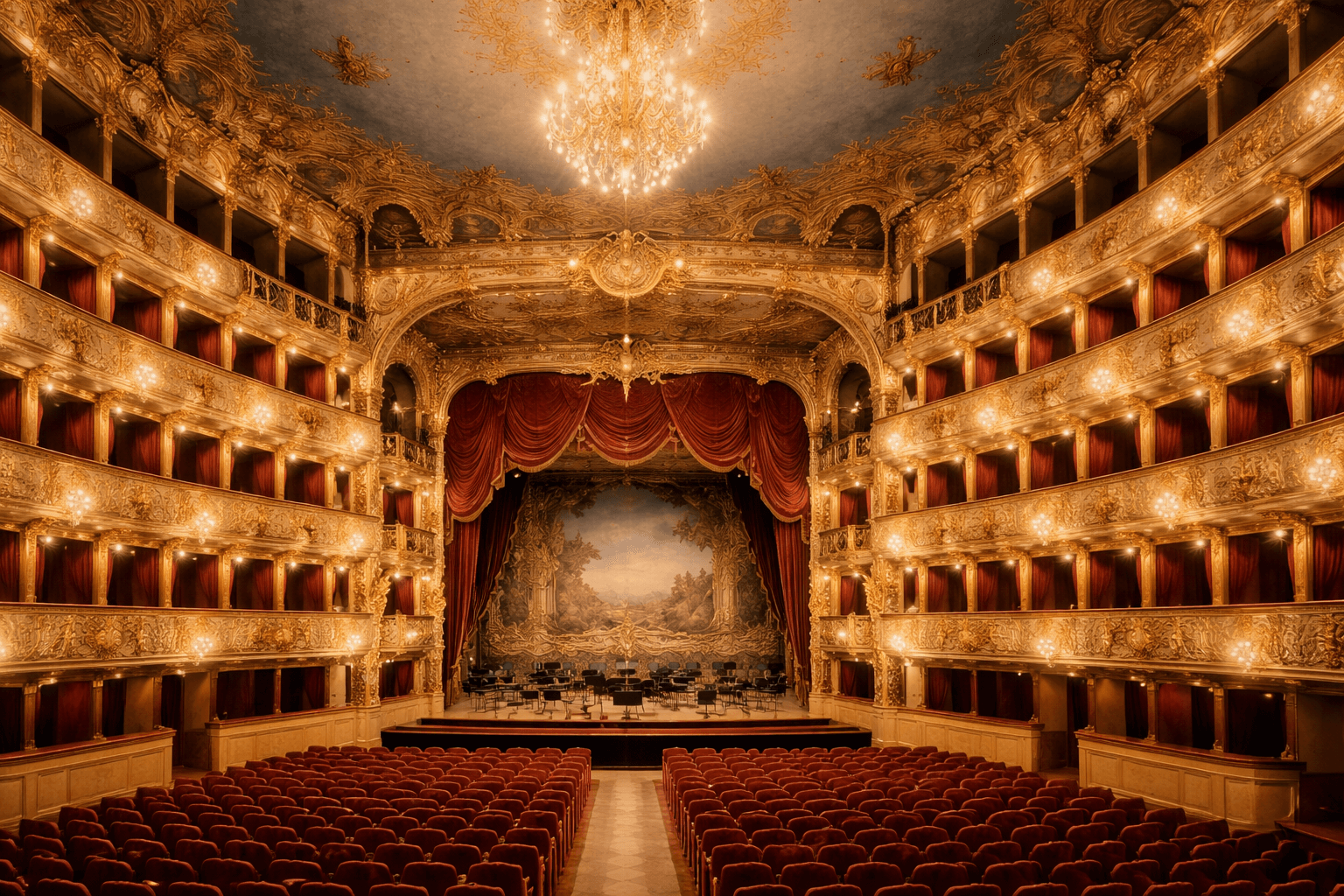
From an architectural point of view, Teatro La Fenice Venice is striking for the refinement of its interiors, because every element was designed to create a harmonious and elegant environment. The main hall, with its typical horseshoe shape, reflects the model of Italian-style theaters, yet it is enriched by golden decorations, stuccos, and frescoes that enhance its magnificence. Due to the faithful reconstructions, the interior spaces maintain a strong link with the past, while responding to modern technical needs. The boxes, distributed over several levels, offer a privileged view of the stage, because the acoustics were studied with great care. In summary, the architecture of Teatro La Fenice Venice represents a perfect balance between aesthetics, functionality, and tradition.
Skip the line Ticket to La Fenice Theater with Audio Guide
The musical and cultural role over time
Teatro La Fenice Venice has played a central role in the history of opera music, because it has hosted the premieres of works that are today considered masterpieces. However, its value is not limited to opera, due to the variety of cultural events that have animated the theater over time. Symphonic concerts, special events, and artistic performances have contributed to making La Fenice a cultural point of reference. Over the centuries, the theater has maintained a prestigious position in the European musical landscape, because it has succeeded in combining tradition and innovation. In summary, Teatro La Fenice Venice continues to perform a fundamental cultural function, strengthening the image of Venice as a city of music and art.
The visiting experience for tourists
For tourists, visiting Teatro La Fenice Venice represents an experience of great value, because it allows for direct contact with one of the city’s symbolic places. Visits allow for the exploration of the main hall and the most significant rooms, yet even the simple observation of the interiors conveys a strong sense of history and prestige. Due to international interest, the theater is often very crowded; however, the organization of visits allows the spaces to be appreciated in an orderly manner. In summary, the experience of visiting Teatro La Fenice Venice enriches a trip to Venice, because it offers a different perspective compared to the most well-known sites.
Teatro La Fenice Venice as a symbol of Venice
In the Venetian tourist and cultural context, Teatro La Fenice Venice takes on a meaning that goes beyond that of a simple historic building. Because it represents the city’s ability to preserve its own identity, the theater is perceived as a symbol of continuity and rebirth. However, its importance is not only symbolic, due to the active role it continues to play in contemporary cultural life. In summary, Teatro La Fenice Venice embodies the spirit of Venice itself: fragile yet resilient, elegant yet marked by history. For this reason, it remains an essential stop for those who truly wish to understand the soul of the city.
Skip the line Ticket to La Fenice Theater with Audio Guide
FAQ – Teatro La Fenice Venice
1. How much does a ticket to La Fenice cost?
The price of a ticket varies because it depends on the type of show, the position of the seats, and the time of year. However, there are different price ranges suitable for different needs.
2. How long does it take to visit Teatro La Fenice?
A standard visit generally takes 45 to 60 minutes, because it includes the main spaces of the theater. However, the duration may vary due to rehearsals or ongoing events.
3. How should one dress at La Fenice?
There is no mandatory dress code, yet for evening performances, elegant attire is recommended due to the formal environment.
4. Who is the director of La Fenice in Venice?
The management of the theater can change over time, because it is linked to official appointments. However, updated information is always available through the theater’s institutional channels.