

What not to do in Venice: common mistakes, local etiquette and useful tips for visitors
- 5 min read
Visiting Venice is a unique experience. There is no other city in the world built on water, without roads or cars, where a living history intertwines daily with the lives of its residents. Precisely for this reason, Venice is not like other cities. Understanding what not to do in Venice is essential—not just to avoid fines or embarrassment, but to enjoy a better, more authentic, and respectful journey.
Venice City Pass all Inclusive 72h
Using the City as a Resting Place Instead of a Thoroughfare
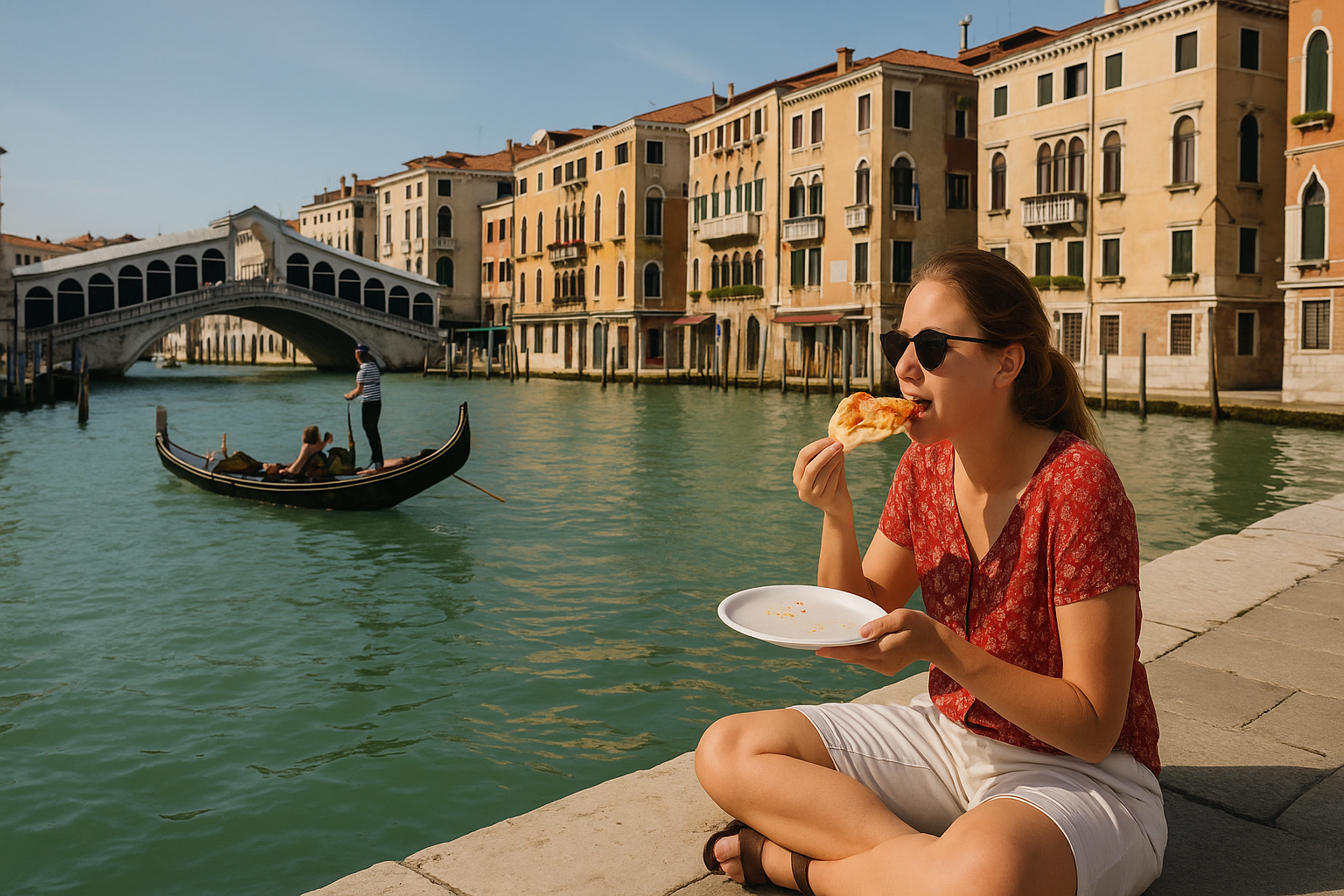
One of the most common mistakes visitors make is treating bridges, steps, staircases, and monument entrances as resting areas. In Venice, these elements are not decorative; they are essential infrastructure for daily mobility. The city is built on limited space with no alternative routes; every blockage creates a domino effect that slows down residents, workers, and other visitors.
Sitting on a bridge or church steps disrupts a continuous flow of people, often in already congested areas. This isn’t just about etiquette—it’s about urban functionality. Venice requires a different kind of spatial awareness: you can stop, but you should do so in campi (open squares), in parks, or inside cafes and dedicated spaces.
Consuming Food Hastily on the Go
While eating while walking is common in many cities, it takes on a different meaning in Venice. The fragility of the spaces and the lack of “neutral” transit areas make street eating problematic. It’s not just about crumbs or litter; it’s about a lifestyle that clashes with the city’s nature.
Venice invites you to pause, not to rush. Taking the time to sit down and eat is part of the local experience. Treating food as something to be consumed “on the move” contributes to the degradation of public spaces. Even a quick snack has its natural place in a bacaro (local wine bar) or a quiet square—never along a crowded calle (alley).
Moving Without Considering Those Who Live and Work There
A frequent error is moving as if Venice were inhabited exclusively by tourists. Stopping suddenly in the middle of a narrow alley, blocking the way to take photos, or walking in large groups without leaving room for others to pass are behaviors that ignore the city’s daily dimension.
Venice is crossed every day by students, workers, the elderly, and families. The narrow streets require a form of coexistence based on mutual awareness. Step to the side to check a map, allow faster walkers to pass, and follow the flow rather than fighting it.
Interacting with Urban Wildlife
Feeding pigeons is often seen as an innocent or even affectionate gesture, but in Venice, it is a serious problem. These birds damage historical surfaces, accelerate the deterioration of materials, and create unsanitary conditions. For this reason, there are specific bans and fines, particularly in St. Mark’s Square.
Venice City Pass all Inclusive 72h
Confusing Venice with a Beach Resort
The presence of water can be misleading, but Venice is not a seaside resort. Walking around in swimwear, shirtless, or in beach attire ignores the cultural and urban context. Venice is a historic city with places of worship, institutions, and residential spaces.
Dressing appropriately doesn’t mean sacrificing comfort, but rather adapting it to the location. This is especially true when visiting churches. If you want the beach, it is easily accessible at the Lido, but the historic center is not the place for it.
Relying Solely on Digital Shortcuts
Relying entirely on digital maps is a common trap. Venice does not follow a linear urban logic: discontinuous numbering, dead ends, and paths that end abruptly at the water are part of its structure. Apps often fail to account for these nuances.
Learning to navigate by reading the city, following traditional yellow signage, or asking for directions is part of the adventure. Venice isn’t a place you just cross; it’s a place you explore, even if it means getting lost for a few minutes.
Reducing Venice to a Few Iconic Spots
Limiting a visit to St. Mark’s Square and the Rialto Bridge means seeing only a tiny fraction of the city. Venice is made of different sestieri (districts), each with its own identity. Cannaregio, Dorsoduro, and Castello offer a more local, less crowded, and often more authentic glimpse into Venetian life.
Treating Venice as a Quick Stopover
Perhaps the biggest mistake is thinking Venice can be understood in a few hours. The city changes profoundly between day and night, and between peak hours and quiet moments. Visiting only as a day-tripper means missing its true rhythm and atmosphere.
Venice City Pass all Inclusive 72h
FAQ – Frequently Asked Questions
- Is it really forbidden to sit anywhere? Yes, in many areas it is forbidden to sit on steps, monuments, and bridges. Use the squares (campi) or cafes.
- Can I eat while walking? It’s better to avoid it. It is not part of the local culture and contributes to congestion.
- Are there fines for bad behavior? Yes, specifically for feeding pigeons, wearing inappropriate clothing, and “camping” in public spaces.
- Is walking slowly a problem? No, but stopping suddenly or blocking the entire alley is.
- Do Venetians hate tourists? No. They dislike disrespectful behavior that ignores the fact that the city is their home.