

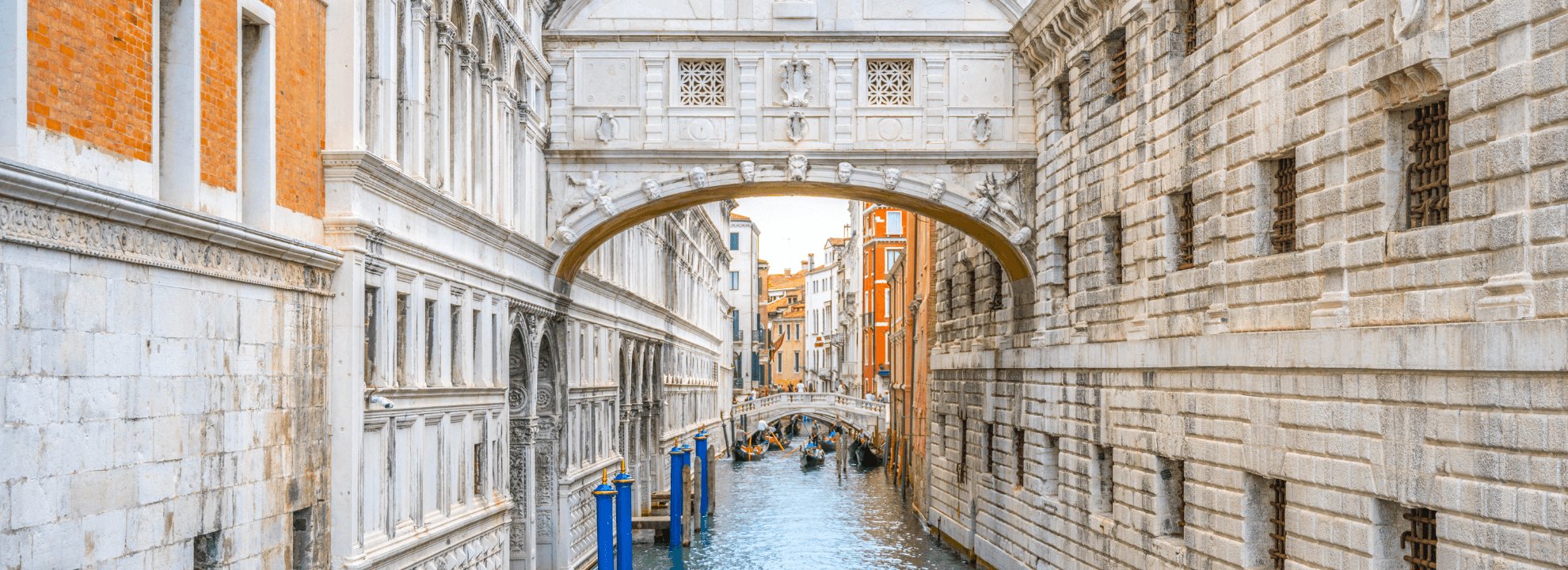
Doge’s Palace
This Gothic building on the Grand Canal remains one of the symbols of Venice, not only for its monumental architecture, but also for the artistic treasures contained within. The painting cycles by Tintoretto, Tiepolo, and Titian decorate both public and private rooms: a deep immersion into the artistic power of the Serenissima. Furthermore, it is often possible to include a visit to the nearby St. Mark’s Basilica, creating a complete experience between art and history.
The tour route crosses rooms that made the history of the Republic: the Chamber of the Great Council, one of the largest decorated rooms in Europe, houses Tintoretto’s monumental Paradise and the series of portraits of the doges along the frieze. Before reaching it, you ascend the Golden Staircase, the ceremonial staircase entirely covered in gilded decorations, once reserved for the illustrious guests of the Serenissima. The itinerary continues towards the Doge’s Apartments and culminates in crossing the famous Bridge of Sighs, which connects the palace to the ancient prisons: a short but highly suggestive passage, frequently cited in the literary tradition related to Venice.
To find out more: Doge’s Palace Venice: history, rooms not to be missed and all the works to see
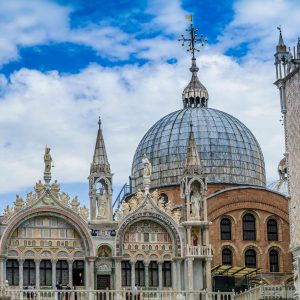
St. Mark's Museums with Doge's Palace Skip-the-line Ticket + Digital Guide
Scuola Grande di San Rocco
Here art becomes a visual spectacle: Tintoretto entirely covered walls and ceilings with vigorous biblical scenes and theatrical details, while paintings by Tiepolo and Titian can be admired, such as the Annunciation, Abraham and the Angels, or Hagar and Ishmael. This place is an essential stop on tours dedicated to the Venetian school, for those wishing to understand the expressive intensity of the Venetian Renaissance.
What makes the Scuola Grande di San Rocco unique is the continuity of the pictorial narrative: Tintoretto worked for over twenty years on the decoration of the building, filling not only the walls but also entire ceilings with biblical scenes, in a cycle that for its scale is often compared to the Sistine Chapel. The Sala dell’Albergo, the first to be decorated, houses the extraordinary Crucifixion, considered one of the most intense works of the artist’s entire production. To orient yourself among the dozens of canvases, it is useful to bring a guide or an audio guide: the iconographic richness of the room can be overwhelming without some reference points.
Peggy Guggenheim Collection
An oasis of modern art in the classical soul of the city: located in the splendid Palazzo Venier dei Leoni, the collection gathers 20th-century masterpieces including Picasso, Pollock, Magritte, and Calder, presented in elegant spaces with a sculpture garden. A breath of fresh and bold art in the heart of the lagoon.
Peggy Guggenheim chose this unfinished palace on the Grand Canal as her Venetian residence and moved there the collection gathered over decades of direct relationships with the artists of the European and American avant-gardes. Walking through the rooms, you encounter works by Max Ernst, to whom the collector was married, along with works by Jackson Pollock, of whom Peggy was among the first supporters. The sculpture garden, today the burial place of Peggy herself alongside her beloved dogs, houses works by Marino Marini and other 20th-century sculptors, and is one of the most charming green spaces to stop by in Venice.
Basilica dei Frari
An unexpected artistic treasure chest: despite the sober facade, inside you will find works by Titian, Bellini, and even the Florentine Donatello, in addition to extraordinary wooden stalls carved by the Cozzi brothers. A sublime testimony of sacred art finds elevation in simplicity.
In the center of the apse dominates Titian’s Assumption, one of the most famous altarpieces in the world: the composition, which guides the gaze from the bottom upwards following the ascending movement of the Virgin, was a turning point for 16th-century Venetian painting. The basilica also houses the funeral monuments of some of the protagonists of Venetian art history and politics, including Titian himself and the famous pyramidal monument dedicated to Antonio Canova, created posthumously by his students based on a project originally intended for Titian. The contrast between the Gothic sobriety of the building and the richness of the works it preserves is part of its charm.
Gallerie dell’Accademia
The temple of Venetian painting: curator of centuries of art, it houses works by great masters such as Veronese, Tiepolo, Canaletto, Bellini, as well as Leonardo’s famous Vitruvian Man (rarely exhibited for conservation reasons). A journey through centuries of artistic magnificence in a single museum.
The exhibition itinerary is organized in chronological order and allows you to follow the evolution of Venetian painting from the 14th to the 18th century. Among the most popular rooms are those dedicated to Giovanni Bellini, with his Madonnas against a golden background and very soft light, and the one housing Vittore Carpaccio’s narrative cycle dedicated to the Legend of Saint Ursula, rich in details about daily Venetian life in the 15th century. There is no shortage of large canvases by Paolo Veronese, including the monumental Feast in the House of Levi, which the artist had to rename precisely because of the religious censorship of the time. The Gallerie dell’Accademia are housed in the ancient complex of the Scuola della Carità, of which they still preserve some original rooms today.
Pinault Collection
Contemporary art finds a home in Venice: the exhibition spaces of Palazzo Grassi and Punta della Dogana present temporary exhibitions featuring living artists such as Damien Hirst, Cindy Sherman, and Sol LeWitt. A comparison between modernity and historical context that is truly unique for lovers of the art of our time.
Palazzo Grassi, the last great noble palace built on the Grand Canal before the fall of the Republic, was renovated by the Japanese architect Tadao Ando, who successfully integrated contemporary lines in concrete with the historic structure of the building. Punta della Dogana, the former sea customs house located at the tip of Dorsoduro, shares the same architectural signature and looks directly onto the St. Mark’s basin, offering one of the most beautiful views of the city. Exhibitions change periodically, so it is worth checking the current program before visiting, especially if you are interested in a specific artist or theme.
Fondazione Querini Stampalia
A hidden treasure: it offers glimpses into aristocratic Venetian life and a refined collection of works, with contemporary proposals in the “Conserving the Future” gallery. Ideal if you are looking for art and quiet away from the crowds.
The art gallery on the noble floor preserves paintings by Gabriel Bella, which tell through small canvases the festivals, civil rituals, and daily life of 18th-century Venice, as well as works by Bellini and Palma il Vecchio. On the ground floor, however, the garden and museum spaces were redesigned in the 1960s by the Venetian architect Carlo Scarpa, whose intervention, featuring water basins, exposed concrete, and bronze details, is today considered a masterpiece of 20th-century museum architecture. The foundation also organizes temporary contemporary art exhibitions, in constant dialogue with the historical collections.
Ca’ Pesaro – International Gallery of Modern Art and Oriental Art Museum
A palace overlooking the Grand Canal houses two gems: the gallery of modern art, with international names (Klimt, Rodin, de Chirico), and the oriental museum, with a precious Japanese collection from the Edo era. All framed by splendid views of the city. Ca’ Pesaro is part of the Venetian Civic Museums (MUVE): if your itinerary includes multiple art stops, a cumulative pass can be more convenient than single tickets.
Among the most photographed works in the International Gallery of Modern Art is Gustav Klimt’s Judith II, one of the rare paintings by the Austrian artist visible in Italy, along with sculptures by Auguste Rodin and metaphysical canvases by Giorgio de Chirico. On the second floor, the Oriental Art Museum houses one of the most important collections of Japanese art in Europe, gathered during a long journey to the Far East by Prince Henry of Bourbon in the 19th century: samurai armor, lacquers, porcelains, and ukiyo-e prints tell of a world very far from Renaissance Venice, yet preserved in the same palace overlooking the Grand Canal.
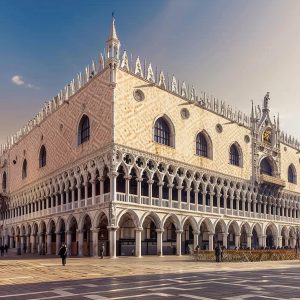
Venice 11 Museum Pass + Skiptheline Entry to Doge's Palace
Venice Biennale
The contemporary art event par excellence: from late April to November, international artists and architects converge on the Giardini della Biennale and the Arsenale. The exhibitions rotate between art and architecture, featuring national pavilions, temporary exhibitions, and a vast collateral program. The Giardini, created at the behest of Napoleon at the beginning of the 19th century, today house dozens of national pavilions built during the 20th century by different countries, each with its own architectural style: from the rationalism of the Italian pavilion to the more experimental design of the Nordic pavilions.
The Arsenale, the ancient shipyard of the Republic where the galleys of the Venetian fleet were once built, instead hosts the curated international exhibition and the central pavilion, as well as a rich program of collateral events scattered throughout the city. Even in years when the edition dedicated to art does not take place, Venice still hosts the Architecture edition, keeping this international vocation alive all year round.
Why follow this guide
This guide for art lovers in Venice proposes a balanced itinerary, covering historical, modern, and contemporary art in emblematic contexts of the city. It offers both classical locations (palaces, churches, museums) and updated proposals (Pinault, Biennale), helping you enjoy a complete and authentic experience. If you prefer not to organize the itinerary between the Doge’s Palace and the Museums of Piazza San Marco on your own, a guided tour with an expert allows you to grasp every detail without logistical worries.
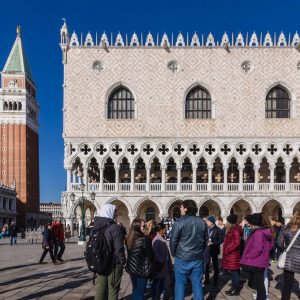
Guided tour of St. Mark's Basilica + Doge's Palace + Museums of St. Mark's Square
FAQ – Guide for art lovers
- What is the most important art museum in Venice? Doge’s Palace is considered the artistic and institutional symbol of the city, but the Gallerie dell’Accademia house the largest collection of Venetian painting, from the 14th to the 18th century.
- Is it advisable to buy tickets in advance for art museums in Venice? Yes. Doge’s Palace and the Piazza San Marco Museums easily sell out on weekends and during high season: a skip-the-line ticket purchased online avoids lines and allows for better planning of the day.
- How much time is needed to visit the Doge’s Palace and the museums of Piazza San Marco? On average, 2-3 hours are needed for the Doge’s Palace and about an additional hour for the Correr Museum and the Archaeological Museum, if included in the same ticket.
- What is the best time to visit the Venice Biennale? The Biennale is open from late April to November. The first few weeks and summer weekends are the most crowded: weekday mornings offer a more relaxed experience.
- Where is the Peggy Guggenheim Collection located? The collection is located in Palazzo Venier dei Leoni, on the Grand Canal, in the Dorsoduro district, a few minutes’ walk from the Accademia.
- Is there a pass that includes multiple art and history museums in Venice? Yes, the Venice Pass 11 museums includes skip-the-line entry to the Doge’s Palace and 10 other museums in the civic circuit, including Ca’ Pesaro, with a single ticket at an advantageous price.